
Safety First: Locking Mechanisms in Tower Welding Rotators
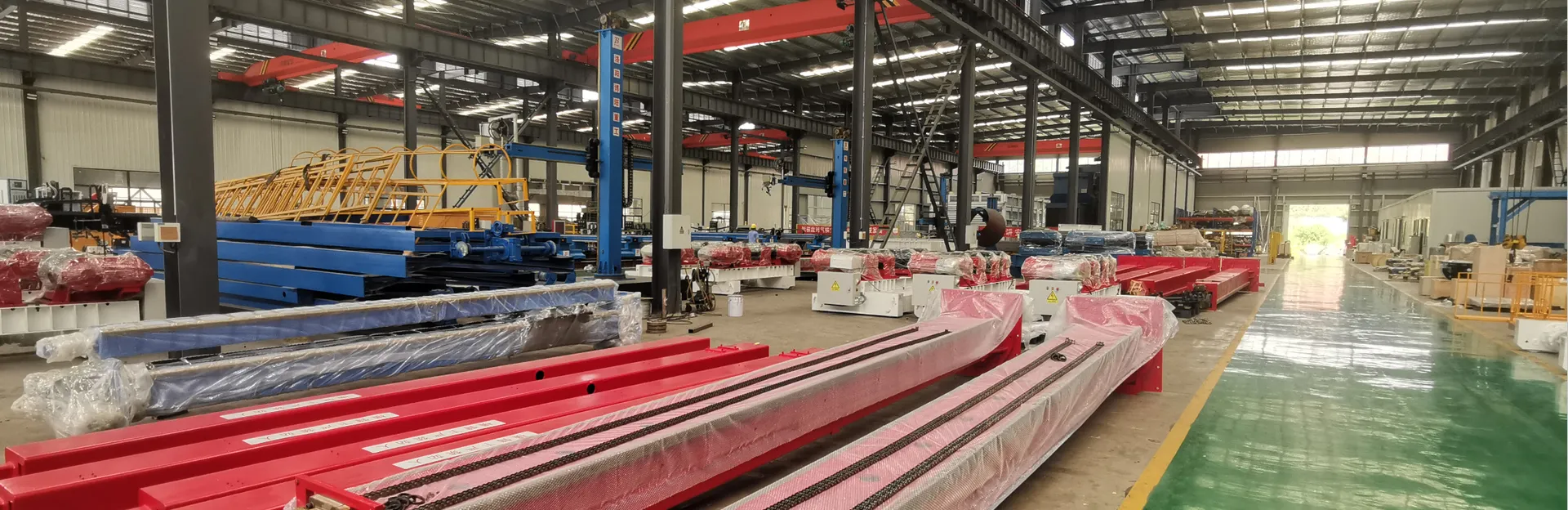
Tower welding rotators play a critical role in fabricating wind turbine towers, where precision and stability directly affect weld quality and worker safety. Among all components, the locking mechanism stands as the first line of defense against unintended rotation, load slippage, or catastrophic failure. Understanding how these locking systems function — and what distinguishes a reliable design from a risky one — is essential for any operation that values both productivity and personnel protection. This article examines the engineering principles behind locking mechanisms in tower welding rotators, highlights key design variations, and explains why BOTA prioritizes safety in every rotator it produces.
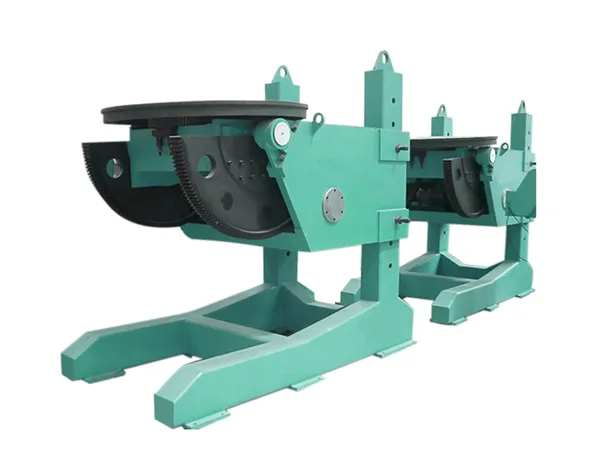
A tower welding rotator supports and rotates heavy cylindrical sections — sometimes weighing dozens of tons — during circumferential welding. The locking mechanism serves two distinct purposes: positional locking holds the workpiece stationary at a precise angle for manual or automated welding, while emergency braking stops rotation instantly if power fails or a hazard occurs. Without a robust locking system, a sudden shift in load could crush workers, damage the weld joint, or cause the entire assembly to topple. Industry standards such as ASME B30.7 and OSHA regulations require rotators to have redundant braking and locking features. BOTA integrates both active and passive locking elements to meet these strict requirements.
Three primary locking technologies dominate the market: friction-based, mechanical pawl, and electro-mechanical brakes. Each has distinct advantages and limitations.
BOTA’s tower welding rotators exclusively use spring-applied, power-released electro-mechanical brakes on the main drive shaft, supplemented by a secondary mechanical locking pin for maintenance and setup positions. This dual-layer approach ensures that even the primary brake’s electrical system fails, the mechanical pin prevents dangerous drift.
When evaluating rotator suppliers, the differences in locking design directly impact safety margins, maintenance intervals, and total cost of ownership. The table below compares BOTA’s standard locking system with conventional friction-only designs.
These numbers reflect real-world performance data from BOTA’s internal testing and field reports. The combination of high torque, fast response, and redundant backup makes BOTA rotators a preferred choice for wind tower manufacturers who cannot afford downtime or safety incidents.
Not all rotators are built for the same duty cycle or load geometry. When specifying a unit, procurement engineers must evaluate:
The locking brake must be rated for the maximum static load, but also for dynamic torque if the rotator is used for tilting or off-center welding. BOTA provides a detailed torque chart with each rotator model, matching lock capacity to the workpiece weight and center-of-gravity offset.
Outdoor tower assembly yards expose rotators to dust, moisture, and temperature extremes. Sealed electro-mechanical brakes (IP65 or higher) resist contamination better than open friction systems. BOTA encloses all brake components in a sealed housing with automatic moisture drainage.
Verify that the locking mechanism meets relevant international standards: CE marking (Machinery Directive 2006/42/EC), ASME B30.7, and OSHA 29 CFR 1910. BOTA holds ISO 9001:2015 certification and provides third-party load test reports on request.
In case of electrical failure, operators must be able to release the brake manually to move the workpiece to a safe position. BOTA designs all rotators with a manual release lever that requires ≤ 50 N of force, and includes visual indicators showing brake status.
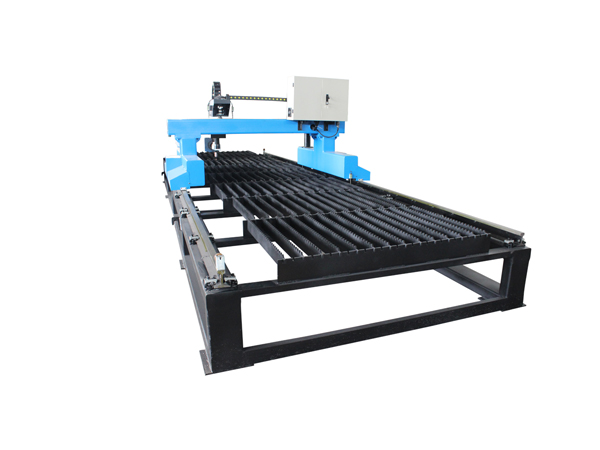
Choosing a tower welding rotator with a properly designed locking mechanism is one of the most consequential safety decisions a fabrication facility can make. The hidden costs of equipment failure — injuries, project delays, liability claims — far outweigh any upfront savings from cheaper, less reliable designs. BOTA builds its rotators with dual-layer failsafe braking, industry-leading torque margins, and rugged environmental protection, because we understand that when a 30-ton tower section is being welded, there is no room for compromise. For detailed specifications or assistance selecting the right rotator for your application, consult the BOTA engineering team or visit our product documentation center.
Boost Throughput: 4-Axis Wind Tower Welding Rotator Features
No information
No. 1 Intersection of Chuangye Avenue and Weilai Avenue,
Yiyang County,Luoyang City, Henan Province, China
+86 400-0379-069
Copyright © 2023 An Automated Welding and Cutting Equipment Manufacturer Focusing on Welding Column Boom and Welding Rotator | All Rights Reserved Technical support: ShangXian