You are here:Home - News
2026-07-06 03:51:37

Compare Pneumatic vs Electric Wind Tower Welding Rotators
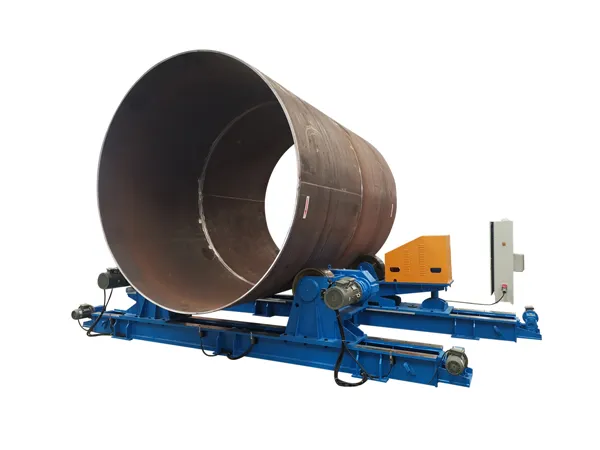
When selecting a welding rotator for wind tower fabrication, the choice between pneumatic and electric drive systems is a critical decision that affects production efficiency, operational cost, and weld quality. Both technologies have distinct advantages and limitations, especially in the demanding context of large-diameter tower sections. This article provides a data-driven comparison of pneumatic vs electric wind tower welding rotators, highlighting performance metrics, maintenance requirements, and total cost of ownership. By the end, you will have clear criteria to determine which system aligns with your production goals, with practical insights informed by BOTA's extensive field experience.

Fundamental Differences in Drive Mechanics

Pneumatic rotators use compressed air to power a rotary vane or piston motor, while electric rotators rely on alternating current (AC) or direct current (DC) motors with gear reducers. The underlying physics dictates their performance envelopes.

Pneumatic Rotators

  • Torque characteristics: Pneumatic motors deliver high starting torque, but torque output drops as speed increases. They are well-suited for applications requiring frequent starts and stops or sudden load changes.
  • Speed control: Speed is regulated via air flow valves, offering infinite variable speed within a range, but regulation accuracy is typically ±10% of set point.
  • Environmental tolerance: Because no electrical components are near the weld area, pneumatic rotators are inherently safe in explosive or dusty environments. They also dissipate heat more effectively in high-temperature settings.
  • Energy source: Requires a compressed air supply (5–7 bar), which adds infrastructure cost and energy loss through compression and distribution.

Electric Rotators

  • Torque characteristics: Electric motors provide constant torque across a wide speed range, with precise control using variable frequency drives (VFD). For wind tower welding where consistent rotational speed is crucial for uniform weld beads, electric systems excel.
  • Speed control: VFD-enabled electric rotators achieve speed regulation within ±1% of set point, essential for automated welding processes like submerged arc welding (SAW).
  • Environmental sensitivity: Motors and electronics are susceptible to heat, dust, and weld spatter. Protective enclosures (IP54 or higher) are required, and forced-air cooling may be necessary in high-duty-cycle operations.
  • Energy efficiency: Electrical energy conversion efficiency is 85–90% for modern AC motors, compared to 30–50% for pneumatic systems (including compressor losses).

Performance Comparison: Torque, Speed, and Duty Cycle

Torque density: For a given physical size, electric rotators generally produce higher torque per unit of weight. However, pneumatic rotators can be overloaded momentarily (up to 150% rated torque) without damage, whereas electric motors risk overheating if overloaded for more than a few seconds.

Speed range: Electric rotators achieve a wider speed ratio (typically 10:1 to 100:1) compared to pneumatic units (3:1 to 5:1). For wind tower sections that require both low-speed positioning (0.1 rpm) and high-speed rotation for weld pass transitions (10 rpm), electric systems offer greater flexibility.

Duty cycle: Pneumatic motors can run continuously at full load without overheating because the expanding air provides cooling. Electric motors, especially those with open drip-proof enclosures, require de-rating for continuous operation above 60% of nameplate rating unless fitted with forced ventilation.

ParameterPneumaticElectric (VFD)
Torque control accuracy±10%±2%
Speed regulation±10%±1%
Max torque-to-weight ratioModerateHigh
Overload capacity150% for 30s110% for 10s
Energy efficiency30–50%85–90%

Maintenance and Total Cost of Ownership

Pneumatic System Costs

  • Lower initial purchase price: Pneumatic rotators are typically 30–40% less expensive than equivalent electric models.
  • Compressed air infrastructure: A 50 hp compressor for a single rotator line costs $15,000–$25,000 plus piping, dryers, and filters.
  • Energy cost: At $0.10/kWh, a 10 hp pneumatic rotator running 8 hours/day, 250 days/year consumes approximately $4,800/year in electricity (counting compressor losses). An electric equivalent would consume $1,500/year.
  • Maintenance: Air motors require periodic vane replacement (every 2,000–4,000 hours). Compressor oil and filter changes are routine. No electrical troubleshooting expertise is needed.

Electric System Costs

  • Higher upfront investment: A VFD-controlled electric rotator may cost $20,000–$40,000 more than pneumatic for the same load capacity.
  • Lower operating cost: Because of high efficiency, payback on the premium is typically 2–3 years through energy savings alone.
  • Maintenance: Bearings and gearboxes are the main wear items. VFDs need protection from voltage surges and temperature. Skilled electrical technicians are required for diagnostics.
  • Lifespan: Electric rotators with proper enclosure can last 15–20 years with bearing replacement every 5 years. Pneumatic units average 8–12 years before motor overhaul.

Recommended Selection Criteria for Wind Tower Welding

Based on BOTA's experience supplying rotators to major tower manufacturers, the following decision matrix applies:

  1. Choose electric rotators when:
    • Weld process requires precise, programmable speed (SAW, laser hybrid).
    • Continuous production with high duty cycle (>80%) is planned.
    • Energy costs are a significant factor in your region.
    • You need speed range greater than 5:1 for different tower section diameters.
  2. Choose pneumatic rotators when:
    • Weld environment is dirty, hot, or potentially explosive (e.g., near coating booths).
    • Initial capital budget is constrained.
    • Production runs are intermittent, and energy efficiency is secondary.
    • Your facility already has a high-capacity compressed air system with free capacity.

Frequently Asked Questions (FAQ)

Can a pneumatic rotator be retrofitted to electric?

Yes, but the entire drive head and control system must be replaced. BOTA offers modular drive units that allow conversion without removing the base frame, reducing downtime.

Which type is better for submerged arc welding (SAW) of tower flanges?

Electric with VFD is strongly recommended because SAW requires constant linear speed within ±2% to maintain stable flux coverage and weld geometry. Pneumatic speed drift would cause inconsistent weld quality.

Do pneumatic rotators require less maintenance than electric?

Not necessarily. While electric maintenance requires skilled labor, pneumatic maintenance is more frequent (vane changes, oiler servicing) and can be performed by general mechanics. The total maintenance cost over 10 years is typically 15–20% lower for electric when considering labor rates.

In summary, wind tower welding rotators must match the specific demands of your production environment. Pneumatic systems offer robustness and low initial cost for intermittent, harsh conditions. Electric systems provide precision, efficiency, and long-term value for high-volume, automated welding lines. For tailored guidance, BOTA's engineering team can analyze your existing infrastructure and recommend the optimal drive technology for your operations.

Request for quote
* Name
* Email
* Message Content
Submit
Follow Us
Search
Products
Automatic Welding & Cutting Equipment Welding Production Line Welding Accessories
Contact Us

No. 1 Intersection of Chuangye Avenue and Weilai Avenue,
Yiyang County,Luoyang City, Henan Province, China

+86 400-0379-069

info@bota-weld.com