
Reduce Weld Defects with Synced Rotation on Tower Sections
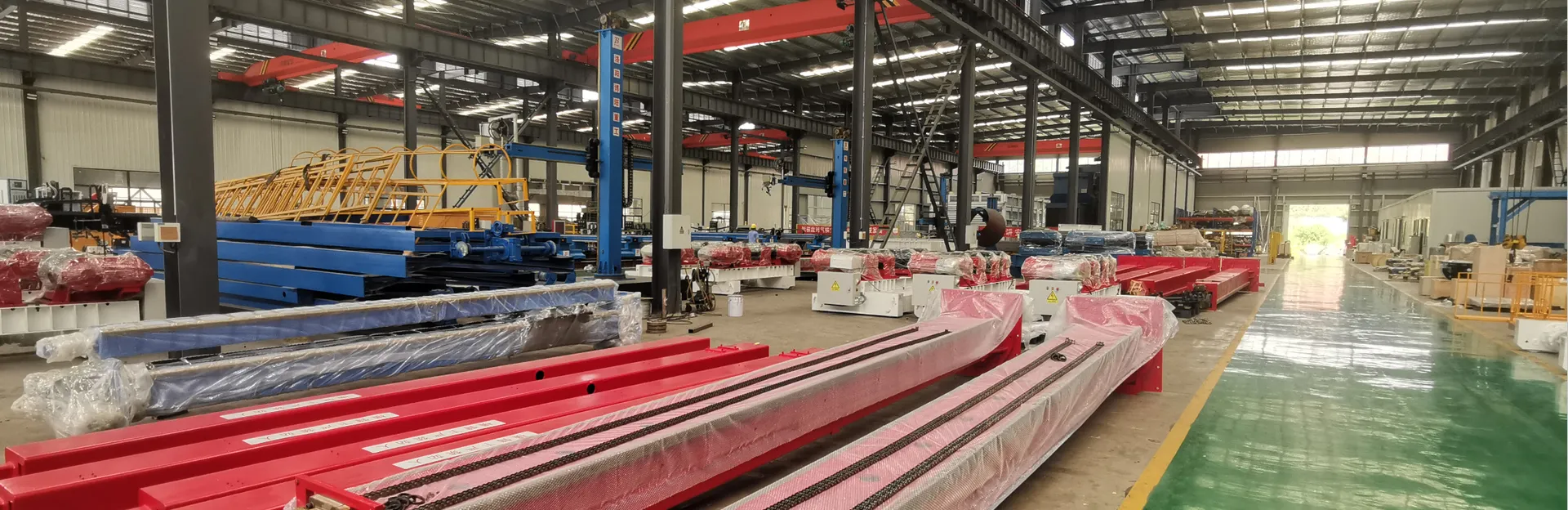
Welding defects in tower sections remain one of the most costly and time-consuming challenges in wind turbine manufacturing. Inconsistent penetration, porosity, and distortion not only increase rework expenses but also compromise the long-term structural integrity of towers. A proven solution lies in synced rotation—coordinating the rotational speed of the tower section with the welding torch movement. When implemented correctly, this technique eliminates uneven heat distribution, reduces residual stress, and ensures uniform weld bead geometry. BOTA has developed advanced turnkey systems that make synced rotation practical and repeatable for production environments.
Tower sections are among the largest and most heavily loaded components in a wind turbine. A single defect—such as lack of fusion, undercut, or centerline cracking—can lead to premature fatigue failure. The consequences include costly field repairs, extended downtime, and potential safety risks. In high-volume fabrication, even a minor defect rate of 2% can translate into hundreds of hours of grinding, welding, and inspection labor per year. The welding process itself introduces thermal cycles that vary with section thickness, joint design, and heat input. Traditional static welding (where the section remains fixed while the welding head moves) inherently creates an asymmetric thermal profile: the lead side of the weld pool experiences different cooling rates than the trailing side. This asymmetry is a primary driver of angular distortion, excessive convexity, and incomplete sidewall fusion.
By contrast, synced rotation aligns the axis of welding travel with the part rotation, making the heat input symmetrical around the circumference. This simple yet powerful change addresses the root cause of many common defects.
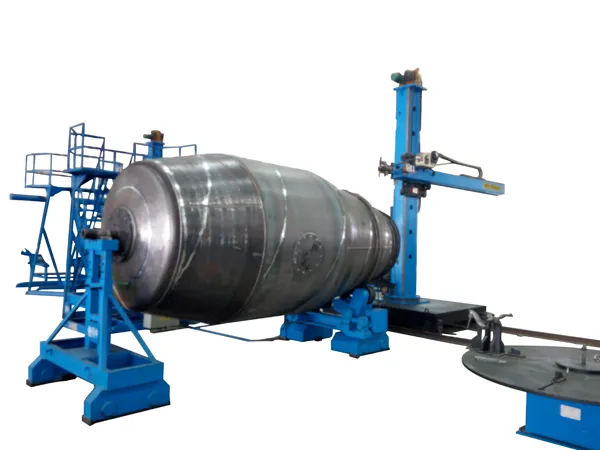
The key mechanism behind synced rotation is the elimination of the relative motion between the welding torch and the workpiece that occurs in the “orbital” or “fixed-torch” methods. In a typical orbital welding setup, the torch moves around a stationary cylinder, constantly changing its angle relative to gravity. This variation alters the puddle shape and can lead to sagging or unstable arc behavior. Synced rotation, on the other hand, keeps the torch fixed in the 12 o’clock or 2 o’clock position while the tower section rotates beneath it. The result is a consistent working angle and a stable molten pool throughout the entire weld pass.
When the section rotates at a constant speed matched to the desired travel speed, every point on the weld joint experiences the same heat input per unit length. This uniformity directly reduces the risk of hot cracking (which occurs when the cooling rate is too fast) and brittle zones (caused by slow cooling). The controlled rotation also allows the use of higher deposition rates without sacrificing quality, because the heat can be better managed. BOTA’s precision rotation controllers maintain rotational speed within ±0.1% of setpoint, ensuring repeatable bead geometry across hundreds of sections.
Lack of fusion (LOF) often arises when the welding arc moves faster than the puddle can wet the sidewalls. With synced rotation, the operator can set a slower travel speed while maintaining high productivity by increasing rotation speed and wire feed rate in tandem. This extended arc-on time per unit length gives the molten metal more opportunity to flow into the joint corners. Furthermore, the constant torch orientation prevents the gas shielding from being disrupted by gravity-induced wobbles, reducing porosity from atmospheric contamination.
The following table summarizes the key differences between the two methods based on field data from mid-volume tower manufacturers:
These advantages translate directly into lower production costs and a more predictable manufacturing schedule.
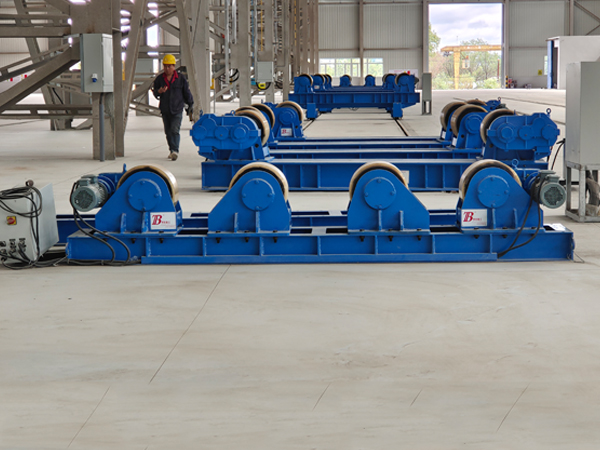
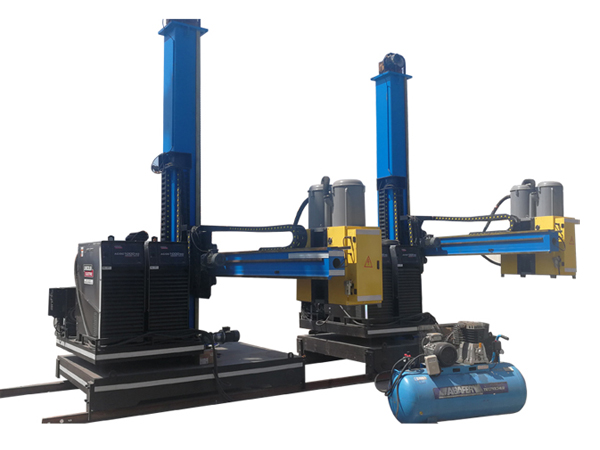
BOTA has engineered complete workcells that integrate a high-torque rotation table, a synchronized welding positioner, and an advanced control system. The rotation table features a large-diameter ring bearing with zero backlash, maintaining concentricity within 0.02 inches over a 20-foot diameter part. The welding head is mounted on a gantry or robotic arm that automatically compensates for any slight ovality in the tower section. The controller synchronizes the rotation speed with the selected welding parameters (voltage, current, wire feed) in real time, using feedback from an encoder and a laser seam tracker.
BOTA’s systems are designed for easy retrofitting to existing welding stations. A typical installation includes a custom rotation table, a controller cabinet, and software integration with the user’s existing weld power source.
A major tower fabricator in the Midwest United States retrofitted two of their longitudinal seam welding stations with BOTA’s synced rotation system. Over a six-month production run, they tracked defect rates by type. The results showed a 72% reduction in weld repairs and a 30% increase in throughput per shift. The initial investment was recovered in less than 10 months through reduced labor, filler metal waste, and inspection costs. Another European manufacturer reported that after switching to synced rotation, their rejection rate on ultrasonic testing dropped from 3.5% to 0.4%.
These outcomes confirm that synced rotation is not merely a theoretical advantage—it is a proven method for achieving high-quality welds on tower sections in a repeatable, cost-effective manner.
Reducing weld defects in tower section manufacturing requires addressing the fundamental asymmetry of the welding process. Synced rotation provides a straightforward, robust solution that improves uniformity, cuts distortion, and lowers rework. With BOTA’s precision systems, manufacturers can implement this technology without redesigning their entire floor layout. The result is a competitive edge in quality, delivery times, and overall cost. Contact BOTA’s engineering team to discuss a pilot installation tailored to your tower sizes and production volumes.
No. 1 Intersection of Chuangye Avenue and Weilai Avenue,
Yiyang County,Luoyang City, Henan Province, China
+86 400-0379-069
Copyright © 2023 An Automated Welding and Cutting Equipment Manufacturer Focusing on Welding Column Boom and Welding Rotator | All Rights Reserved Technical support: ShangXian