
Boost Throughput: 4-Axis Wind Tower Welding Rotator Features
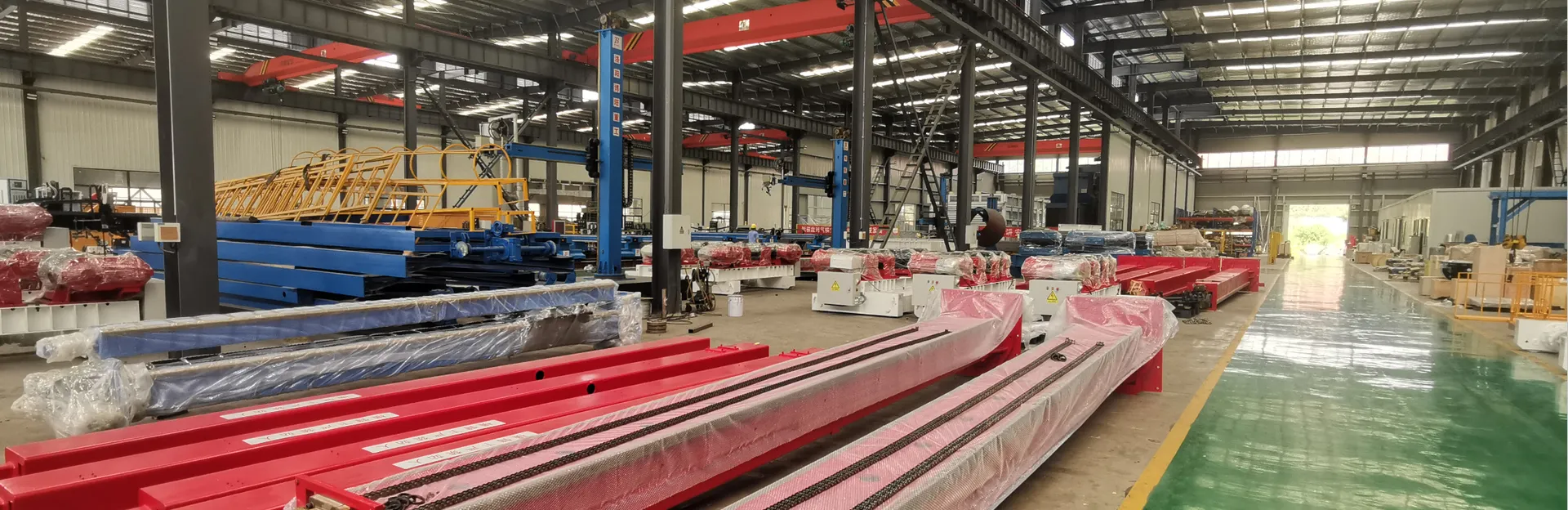
In the demanding field of wind tower manufacturing, welding efficiency directly impacts project timelines and profitability. Traditional rotators often struggle to handle the large, cylindrical sections of wind towers with the precision and speed required for modern production lines. The BOTA 4-axis wind tower welding rotator addresses these challenges by integrating advanced motion control and robust construction, enabling fabricators to significantly increase throughput without compromising weld quality. This article examines the specific features that make this system a game-changer for wind tower welding operations.
Unlike standard 2-axis or 3-axis rotators, the BOTA 4-axis system provides independent rotational control for both the headstock and tailstock, plus two additional axes for tilting or lateral positioning. This configuration allows the welding torch or workpiece to be maneuvered into optimal positions without manual re-clamping, reducing cycle times. The synchronized motion of all four axes enables continuous welding of complex circumferential and longitudinal seams, eliminating interruptions caused by manual repositioning. This is particularly valuable for wind tower sections that require multiple weld passes with precise weave patterns.
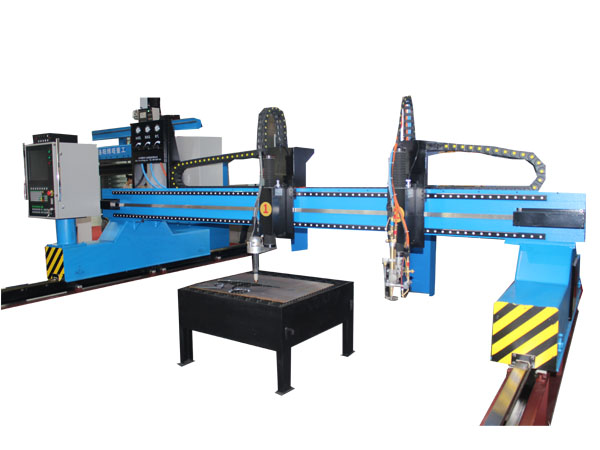
Each axis is powered by a dedicated servo motor with independent speed control, allowing fine adjustments from 0.01 to 10 RPM. This ensures consistent weld travel speed across varying diameters and wall thicknesses, reducing the need for operator intervention and post-weld grinding.
The BOTA control system automatically coordinates axis movements to maintain the weld pool in a flat or slightly inclined position. Real-time feedback from encoders adjusts speed and position within milliseconds, compensating for thermal expansion and workpiece irregularities. This results in a higher first-pass yield and fewer defects.
The rotator features hydraulic or manual self-centering chucks that grip the tower section securely without distorting the thin shell. Quick-change jaw inserts accommodate different flange diameters, reducing changeover time between sections by up to 40% compared to traditional vee-block supports.
To understand the throughput improvement, consider the following comparison between a typical 2-axis rotator and the BOTA 4-axis system in a common wind tower welding scenario (15-meter section, two longitudinal seams, three girth welds):
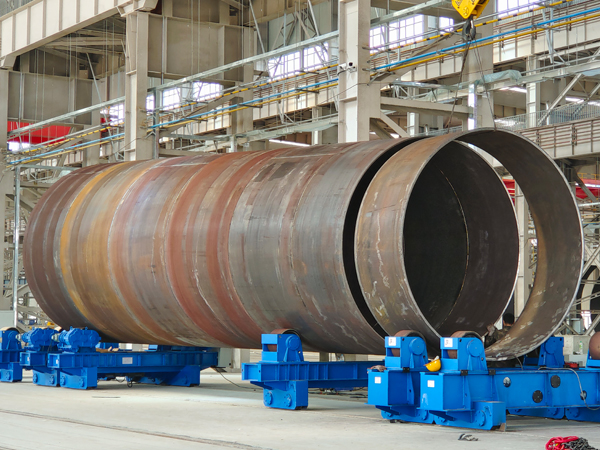
In actual production lines, the BOTA 4-axis rotator is often integrated with automated welding tractors or robots. The ability to tilt the tower section to any angle between 0 and 135 degrees enables gravity-assisted welding for thick root passes. For example, when welding the flange-to-shell joint, the rotator can position the joint at 45 degrees from horizontal, allowing the welder to use a simple downhand technique. This not only speeds deposition but also reduces the skill level required for consistent quality.
Furthermore, the rotator's modular design allows it to be paired with companion units for longer sections. BOTA offers additional idler stands and booster units that can be synchronized via the same control network, extending the effective length capacity without sacrificing throughput. This scalability makes the investment suitable for both small fabricators scaling up and large OEMs replacing aging equipment.
BOTA has been engineering welding positioners and rotators for heavy fabrication for over a decade, with specific expertise in wind energy applications. Every 4-axis wind tower rotator is built with oversized bearings, planetary gearboxes, and a rugged welded steel frame to withstand the high loads and 24/7 operation typical of wind tower workshops. The control system is customizable for different weld processes (SAW, GMAW, FCAW) and can interface with most major weld controller brands.
Beyond hardware, BOTA provides comprehensive support including on-site commissioning, operator training, and remote troubleshooting. The company's commitment to continuous improvement is reflected in customer feedback that cites average productivity gains of 35% after switching to the 4-axis system. For companies seeking to boost throughput while maintaining stringent quality standards, the BOTA 4-axis wind tower welding rotator represents a proven solution.
In summary, the combination of independent four-axis control, intelligent synchronization, and heavy-duty construction directly addresses the productivity bottlenecks in wind tower welding. By reducing setup times, minimizing rework, and maximizing arc-on time, the BOTA rotator offers a clear path to higher throughput and lower cost per welded section.
No. 1 Intersection of Chuangye Avenue and Weilai Avenue,
Yiyang County,Luoyang City, Henan Province, China
+86 400-0379-069
Copyright © 2023 An Automated Welding and Cutting Equipment Manufacturer Focusing on Welding Column Boom and Welding Rotator | All Rights Reserved Technical support: ShangXian