
How to Maintain the Rail and Rack of a Welding Manipulator
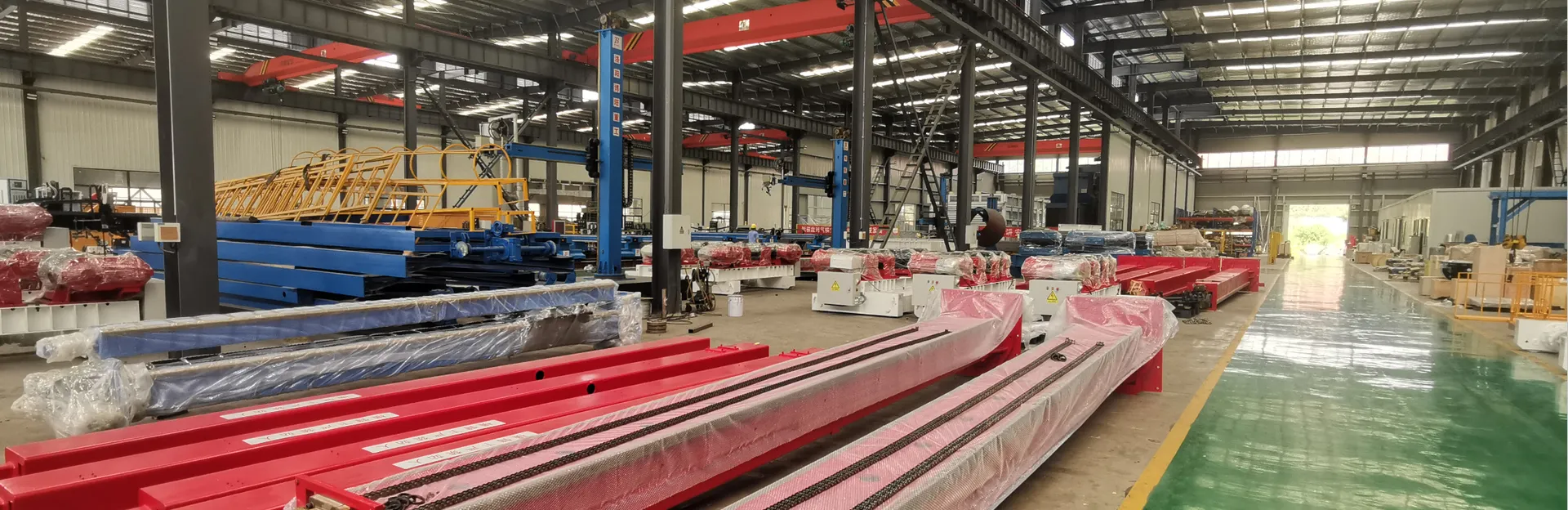
In modern welding automation, the welding manipulator plays a crucial role in improving productivity, weld consistency, and operator safety. However, many users focus heavily on the welding head and control system while overlooking the mechanical transmission components—especially the rail and rack system. In reality, improper maintenance of these parts often leads to positioning errors, vibration, abnormal wear, and even unexpected downtime.
This guide explains how to maintain the rail and rack of a welding manipulator in a practical, experience-driven way. It aims to help equipment managers, maintenance engineers, and workshop supervisors extend equipment life, reduce maintenance costs, and ensure stable welding accuracy.
The rail and rack system is responsible for guiding and transmitting motion in a welding manipulator. The rail provides linear guidance, while the rack engages with the drive gear to convert rotational motion into linear movement.
If maintenance is neglected, the system may suffer from:
Decreased positioning accuracy
Increased backlash between gear and rack
Irregular movement or vibration
Accelerated wear of gears and bearings
Unexpected production interruptions
A well-maintained rail and rack system ensures smooth travel, precise torch positioning, and long-term operational reliability.
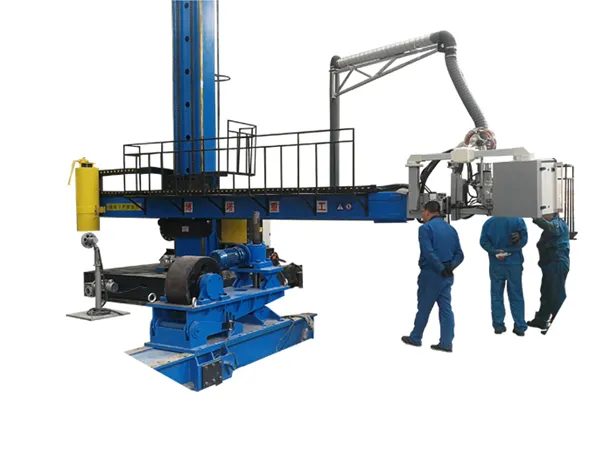
Understanding failure causes helps build an effective maintenance routine. In most industrial environments, the rail and rack system faces several challenges:
1. Dust and Welding Residue
Welding environments produce slag, metal dust, and fumes. These contaminants settle on rails and racks, forming abrasive layers that accelerate wear.
2. Insufficient or Improper Lubrication
Lubrication reduces friction between moving parts. However, too little lubrication leads to dry friction, while excessive or incorrect lubricant attracts dust and creates sticky buildup.
3. Misalignment
Improper installation or long-term operation can cause misalignment between the rack and drive gear. Misalignment leads to uneven load distribution and localized wear.
4. Overloading or Impact Loads
Operating the manipulator beyond its design limits or exposing it to sudden impacts increases stress on the rack teeth and rail structure.
5. Corrosion
Humidity, cooling water exposure, or poor storage conditions can cause rust, especially if protective coatings are damaged.
Routine inspection is the foundation of preventive maintenance. Operators or technicians should perform the following checks daily:
Visually inspect the rail surface for debris, slag, or oil buildup
Check the rack teeth for visible wear, cracks, or deformation
Listen for abnormal noise during operation
Observe movement smoothness and detect any jerking
Ensure lubrication points are not dry
Daily checks require only a few minutes but can prevent major failures.
Cleaning should be carried out regularly, depending on the working environment. In heavy-duty welding workshops, cleaning may be required every shift.
Recommended cleaning steps:
Use a soft brush or compressed air to remove loose dust and debris
Wipe the rail surface with a clean, lint-free cloth
Remove stubborn contaminants using a mild industrial cleaner
Avoid using excessive water, especially near electrical components
Ensure the system is dry before applying lubricant
Consistent cleaning prevents abrasive particles from damaging the rail surface and rack teeth.
Lubrication plays a key role in reducing wear and ensuring smooth motion. However, many users either over-lubricate or use unsuitable products.
Key guidelines:
Use high-quality industrial gear oil or grease recommended by the manufacturer
Apply lubricant evenly along the rack and rail contact areas
Avoid over-application to prevent dust accumulation
Establish a lubrication schedule based on operating hours
Re-lubricate immediately after cleaning
In high-temperature welding environments, selecting heat-resistant lubricants is particularly important.
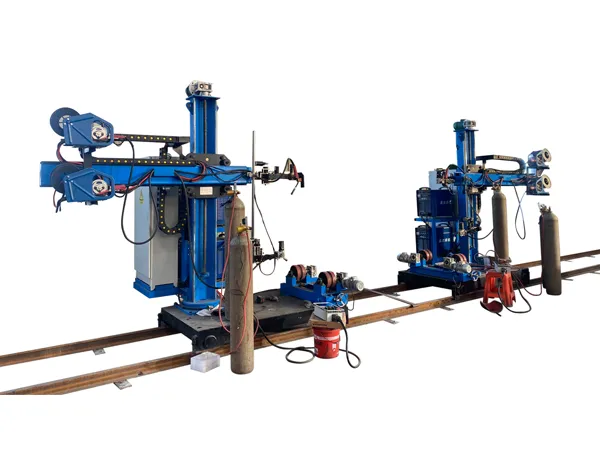
Proper alignment between the rack and pinion gear ensures efficient power transmission and minimizes wear.
Signs of misalignment include:
Uneven wear on one side of the rack teeth
Abnormal noise during movement
Increased resistance or vibration
Adjustment steps:
Check mounting bolts and ensure they are securely tightened
Measure alignment using precision tools if available
Adjust the gear position to ensure proper meshing with the rack
Verify smooth movement after adjustment
If misalignment persists, a professional technician should inspect the system.
Wear Monitoring and Replacement
Even with proper maintenance, rails and racks are subject to gradual wear. Monitoring wear helps avoid unexpected breakdowns.
When to consider replacement:
Rack teeth become visibly worn or chipped
Backlash exceeds acceptable tolerance
Movement accuracy no longer meets welding requirements
Frequent vibration or noise occurs despite maintenance
Replacing worn components in time prevents damage to other parts, such as drive motors and gearboxes.
Since welding manipulators often operate in harsh conditions, protective measures can significantly extend service life.
Recommended solutions:
Install protective covers over rails and racks
Use dust shields or bellows to prevent contamination
Maintain proper ventilation to reduce moisture
Apply anti-corrosion coatings if necessary
A controlled environment reduces maintenance frequency and improves system reliability.
A structured maintenance plan ensures consistency and accountability. Instead of reacting to failures, companies should adopt preventive strategies.
Suggested maintenance schedule:
Daily: Visual inspection and basic cleaning
Weekly: Lubrication and functional checks
Monthly: Alignment inspection and bolt tightening
Quarterly: Detailed wear inspection and performance evaluation
Annually: Comprehensive overhaul and part replacement if needed
Documenting maintenance activities also helps identify recurring issues and optimize operations.
Maintaining the rail and rack of a welding manipulator is not a complex task, but it requires consistency, attention to detail, and a clear understanding of operating conditions. Companies that invest in proper maintenance practices benefit from improved welding accuracy, reduced downtime, and longer equipment lifespan.
Instead of treating maintenance as a reactive task, manufacturers and workshop managers should integrate it into daily operations. A well-maintained welding manipulator not only supports production efficiency but also strengthens overall equipment reliability, which directly impacts project delivery and customer satisfaction.
If you are managing multiple welding systems or planning to upgrade your production line, establishing a standardized maintenance procedure for rail and rack systems will deliver long-term value and measurable returns.
No. 1 Intersection of Chuangye Avenue and Weilai Avenue,
Yiyang County,Luoyang City, Henan Province, China
+86 400-0379-069
Copyright © 2023 An Automated Welding and Cutting Equipment Manufacturer Focusing on Welding Column Boom and Welding Rotator | All Rights Reserved Technical support: ShangXian