
Comprehensive Installation Guide: How to Install a Large Scale Welding Column and Boom?
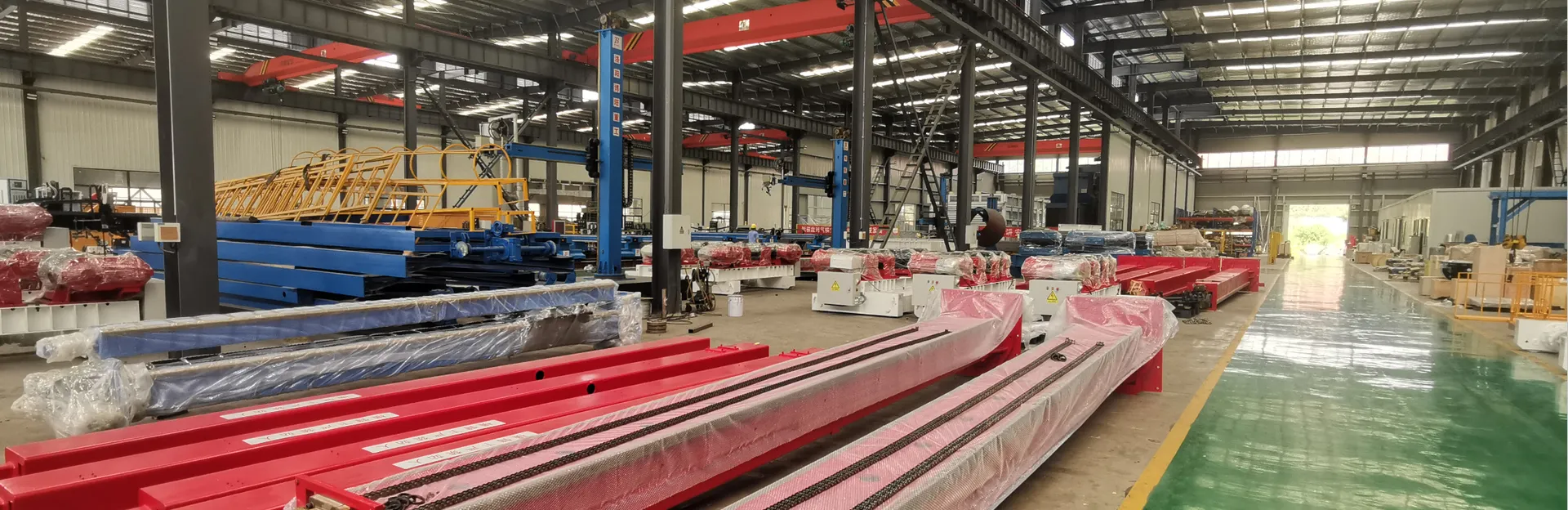
Large scale welding column and boom systems play a critical role in improving welding efficiency, precision, and operator safety in heavy fabrication industries. These machines are widely used in pressure vessel manufacturing, wind tower production, shipbuilding, and steel structure fabrication. However, the installation process directly affects their long-term performance and reliability. This guide provides a clear, practical, and experience-driven approach to installing a large welding column and boom system correctly.
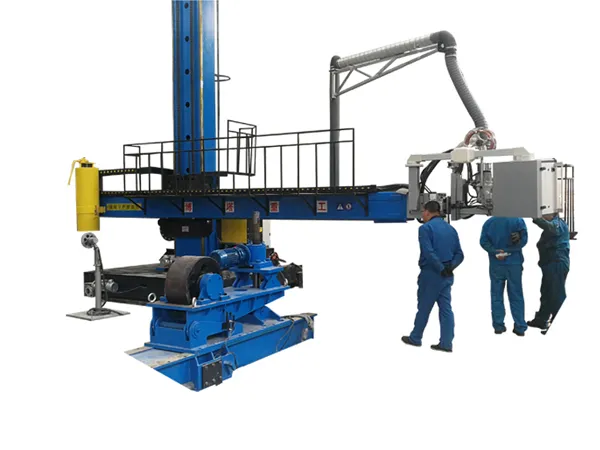
Before starting the installation, the technical team should fully understand the structure and configuration of the welding column and boom. A typical system consists of a vertical column, a horizontal boom, a base (fixed or rotatable), lifting mechanisms, travel carriage, and control system. Some configurations also include integration with welding rotators or manipulators.
The installation team should carefully review the technical drawings, foundation layout, and electrical schematics provided by the manufacturer. When the team understands load distribution, movement range, and installation tolerances, it can significantly reduce alignment errors during assembly.
A stable and properly prepared foundation is essential for safe operation. The concrete base must meet the load-bearing requirements specified by the manufacturer. The installation team should verify the following factors before unpacking the equipment:
The foundation has reached full curing strength
Anchor bolt positions match the equipment base plate
Surface flatness is within acceptable tolerance (typically ≤ 2 mm deviation)
Enough clearance exists for boom extension and rotation
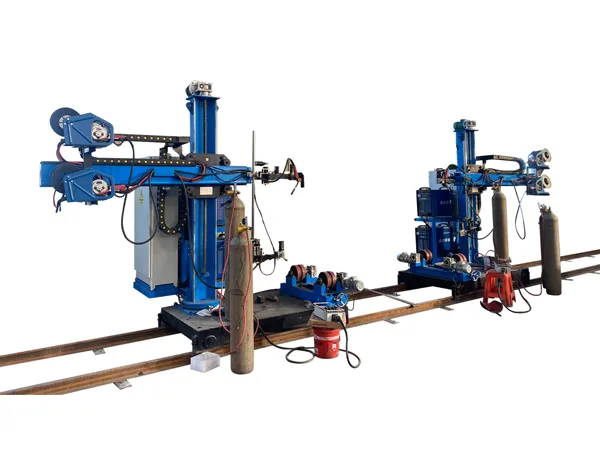
If the installation site involves a rail-mounted traveling column and boom, the rail alignment must be checked using precision leveling instruments. Poor rail alignment often leads to vibration, abnormal wear, and reduced accuracy during welding.
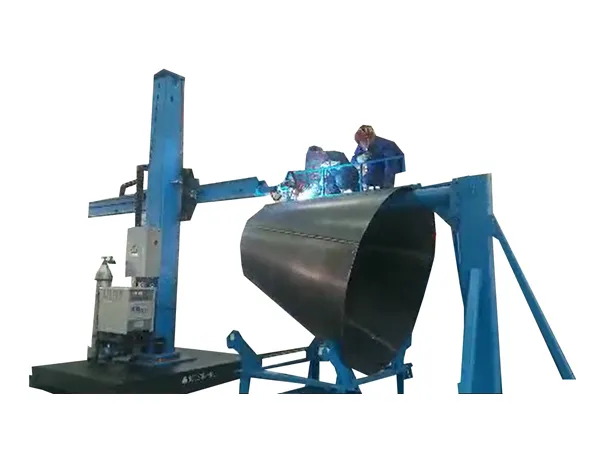
1. Base Positioning and Fixing
The installation begins with positioning the base onto the prepared foundation. The team should carefully align the base with anchor bolts and use a spirit level or laser leveling tool to ensure horizontal accuracy.
After confirming alignment, workers should tighten anchor bolts gradually and evenly. Grouting under the base plate improves stability and minimizes vibration during operation.
2. Column Installation
The vertical column is the core structural component. The installation team should lift the column using appropriate lifting equipment such as a crane, ensuring balanced load handling.
Once the column is positioned onto the base, technicians must check verticality using a plumb line or laser alignment tool. The allowable deviation is usually within 0.1/1000 of the column height. Improper vertical alignment will directly affect boom movement and welding precision.
3. Boom Assembly and Mounting
After securing the column, the team can proceed to install the horizontal boom. The boom must be mounted carefully onto the carriage system attached to the column.
During this step, technicians should ensure:
Smooth movement along the column guide rails
Proper engagement of lifting chains or rack mechanisms
Secure fastening of mechanical and safety locking devices
The boom must move freely without abnormal resistance. Any misalignment at this stage can lead to operational instability later.
4. Mechanical System Integration
Once the main structure is assembled, the installation team should connect all mechanical transmission components, including:
Lifting motors and reducers
Travel motors (if applicable)
Rotation mechanisms (for rotatable base systems)
Lubrication points should be filled according to manufacturer specifications. The team should manually test movements before powering the system to ensure no mechanical interference exists.
5. Electrical System Installation
Qualified electricians should handle electrical installation. The process includes connecting the control cabinet, wiring motors, limit switches, and pendant or remote control systems.
The team must ensure:
Proper grounding of the entire system
Correct voltage supply matching equipment requirements
Reliable cable management to prevent damage during movement
Before energizing the system, electricians should perform insulation resistance tests and continuity checks.
6. System Calibration and Testing
After completing mechanical and electrical installation, the system must undergo calibration and functional testing. This stage determines whether the equipment is ready for production.
The testing process should include:
No-load operation of all movements (lifting, extension, rotation, travel)
Limit switch verification to prevent over-travel
Speed adjustment and synchronization checks
Load testing with simulated welding conditions
If the system integrates with automatic welding equipment, technicians should also verify torch positioning accuracy and repeatability.
Many performance issues originate from improper installation. The installation team should avoid these common mistakes:
Ignoring foundation flatness, which causes structural stress
Skipping alignment checks during column installation
Improper tightening of anchor bolts leading to vibration
Incorrect wiring that affects control system reliability
Lack of lubrication during initial operation
Addressing these issues early prevents costly downtime and maintenance later.
Safety should remain a priority throughout the installation process. The installation team must follow strict safety procedures, including:
Using certified lifting equipment and trained operators
Wearing appropriate personal protective equipment (PPE)
Securing the work area to prevent unauthorized access
Verifying load capacity before lifting heavy components
A well-managed installation not only protects workers but also ensures equipment integrity.
Installation does not end when the machine starts running. Proper post-installation maintenance ensures long-term performance.
The operator or maintenance team should:
Perform regular lubrication of moving parts
Inspect electrical connections periodically
Check alignment and bolt tightness after initial operation
Monitor unusual noise or vibration
Establishing a preventive maintenance schedule will extend the equipment lifespan and maintain welding accuracy.
Installing a large scale welding column and boom system requires careful planning, precise execution, and strict adherence to technical standards. Each step, from foundation preparation to system calibration, directly impacts the machine’s performance and durability.
A professional installation process not only ensures smooth operation but also maximizes productivity and welding quality. Companies that invest time in proper installation will benefit from reduced downtime, improved efficiency, and long-term reliability.
If you are planning to install a welding column and boom system for your project, working with an experienced technical team and following a structured installation approach will help you achieve the best results.
No. 1 Intersection of Chuangye Avenue and Weilai Avenue,
Yiyang County,Luoyang City, Henan Province, China
+86 400-0379-069
Copyright © 2023 An Automated Welding and Cutting Equipment Manufacturer Focusing on Welding Column Boom and Welding Rotator | All Rights Reserved Technical support: ShangXian