
Enhancing Welding Efficiency with Customizable Welding Rotators for Irregular Workpieces
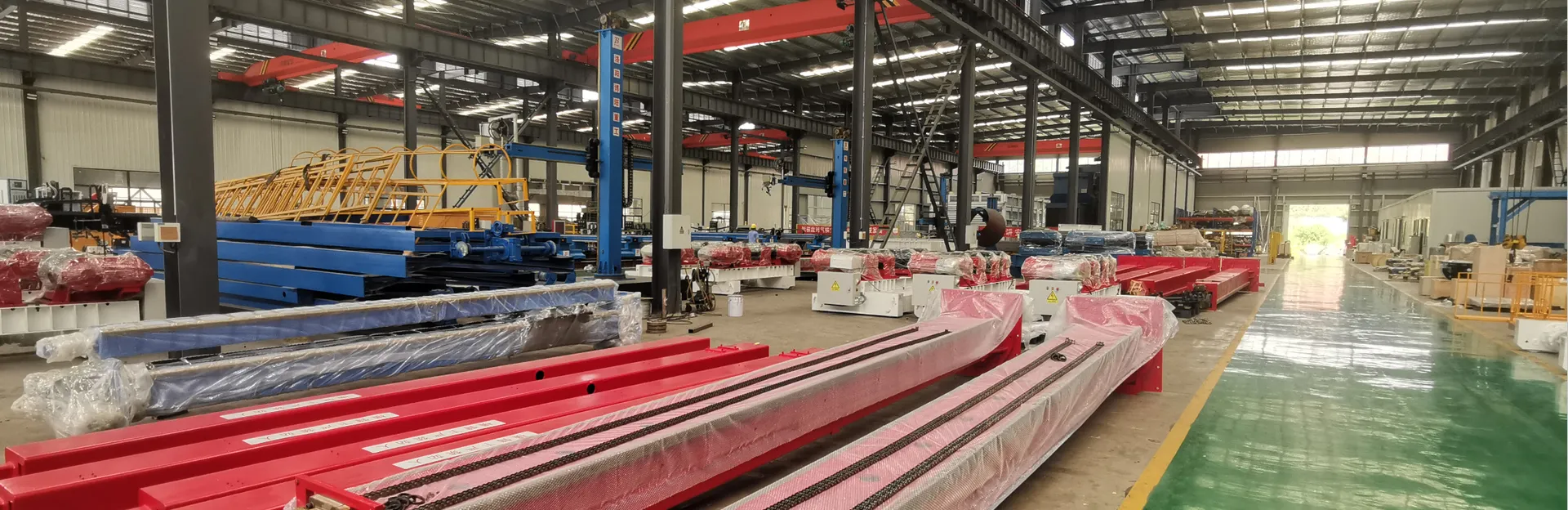
In modern manufacturing and fabrication industries, the welding of irregular workpieces has long posed significant challenges. Traditional welding methods often struggle to accommodate asymmetrical or unusually shaped components, leading to uneven welds, increased labor, and longer production times. This is where customizable welding rotators for irregular workpieces play a transformative role, enabling manufacturers to achieve higher precision, efficiency, and consistency in their welding operations.
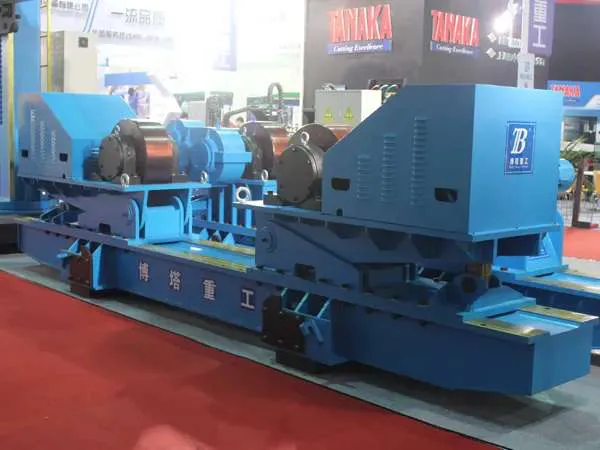
Understanding the Challenges of Irregular Workpiece Welding
Irregular workpieces, such as large-diameter pipes, conical structures, or components with non-standard geometries, often require complex positioning during welding. Manual rotation or handling can result in misalignment, inconsistent weld penetration, and safety risks for operators. Furthermore, conventional rotators with fixed configurations are frequently unable to adapt to non-cylindrical shapes, forcing production teams to rely on makeshift solutions that compromise both quality and workflow.
Manufacturers face several pain points when working with irregular workpieces, including:
Uneven Welding Quality: Irregular shapes make it difficult to maintain a consistent welding speed and angle, leading to defects such as undercut, incomplete fusion, or excessive weld bead buildup.
Increased Labor Costs: Manual adjustment and repositioning of heavy components consume significant manpower and increase production costs.
Safety Hazards: Handling large, awkwardly shaped workpieces manually increases the risk of workplace injuries and accidents.
Production Delays: Frequent repositioning and adjustments can slow down the workflow, reducing overall efficiency and throughput.
Addressing these challenges requires a solution that combines adaptability, precision, and automation.
Customizable welding rotators for irregular workpieces are engineered specifically to accommodate a wide range of shapes and sizes. Unlike standard welding rotators, these units allow operators to adjust roller positions, load capacities, and rotational speeds according to the specific geometry of the workpiece. Key benefits include:
Versatile Roller Configurations: These rotators can be customized with multiple roller setups—V-shaped, U-shaped, or adjustable flat rollers—that securely cradle cylindrical, conical, or irregular components.
Precise Rotation Control: Advanced motorized systems provide smooth and stable rotation, enabling consistent welds across the entire workpiece. Variable speed control allows operators to optimize welding speed for different materials, thicknesses, and joint types.
Enhanced Safety: By minimizing manual handling, these rotators reduce the risk of operator injuries, ensuring a safer working environment.
Improved Productivity: Automation of rotational movement streamlines workflow, reduces downtime, and allows welding teams to focus on quality rather than constant repositioning.
For fabrication facilities that handle custom or one-off projects, the flexibility of customizable rotators ensures that even highly irregular components can be welded efficiently without the need for temporary fixtures or elaborate handling solutions.
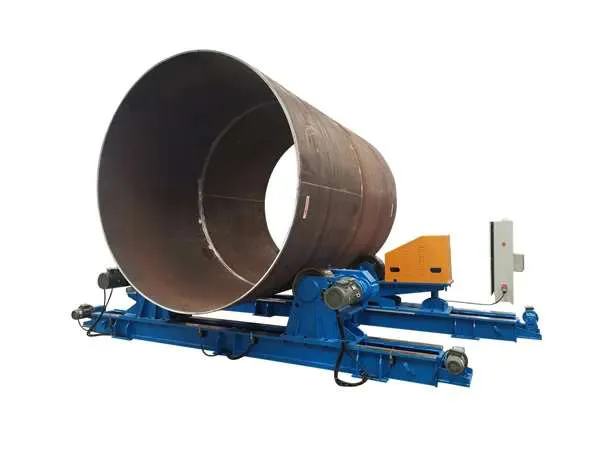
The demand for customizable welding rotators for irregular workpieces spans multiple industries:
Oil and Gas: Large-diameter pipes, pressure vessels, and offshore structures often have irregular shapes that require precise welding to maintain integrity under extreme conditions.
Shipbuilding: Hull sections, conical tanks, and unique marine components benefit from adaptable rotator systems that ensure consistent welds across curved and tapered surfaces.
Aerospace: Aerospace fabrication involves welding complex geometries with tight tolerances, making customizable rotators essential for both safety and quality assurance.
Heavy Equipment Manufacturing: Components like excavator arms, construction frames, and industrial machinery parts often require rotators capable of handling varying shapes and weights.
By adopting such rotators, these industries can achieve higher production efficiency while maintaining strict adherence to quality and safety standards.
Selecting the appropriate welding rotator for irregular workpieces involves considering several critical factors:
Workpiece Size and Weight: Determine the maximum load capacity and diameter range of the rotator to ensure stability and safety during operation.
Adjustability: Look for systems with versatile roller configurations and easy height adjustments to accommodate different geometries.
Motor Power and Speed Control: Choose rotators with variable speed motors and smooth acceleration/deceleration features to maintain consistent weld quality.
Integration with Welding Equipment: Ensure the rotator can seamlessly work with automated welding systems or manual welding stations, depending on your production setup.
Durability and Maintenance: High-quality construction with corrosion-resistant rollers and robust frames will extend the lifespan of the equipment and reduce downtime.
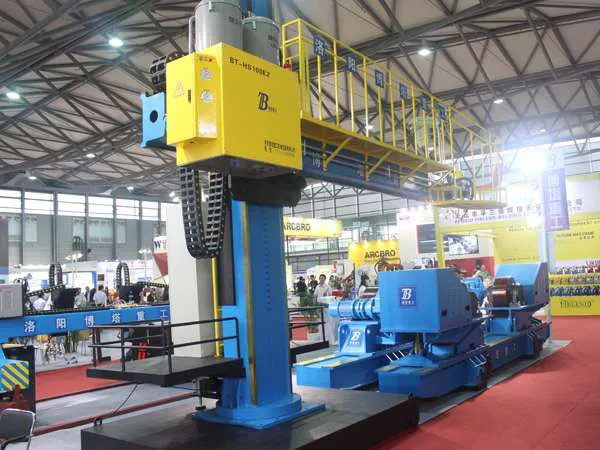
As manufacturing increasingly shifts toward automation and digitalization, customizable welding rotators for irregular workpieces are evolving to incorporate smart technologies. Integration with sensors, programmable logic controllers (PLCs), and welding monitoring systems allows real-time adjustment of rotation speed, alignment, and load distribution. This trend not only improves efficiency but also enhances traceability and quality control, which are critical for industries with stringent standards.
For manufacturers dealing with irregular workpieces, investing in customizable welding rotators is no longer optional—it is a strategic necessity. These rotators address the inherent challenges of welding asymmetrical and non-standard components by offering versatility, precision, and safety. From improving weld quality to enhancing operational efficiency and protecting workers, their advantages are clear and measurable.
By adopting customizable welding rotators, companies can confidently handle complex fabrication projects, reduce labor costs, and ensure consistent quality across all production processes. As the industry continues to embrace automation and innovation, these rotators will remain a cornerstone technology in modern welding solutions.
No. 1 Intersection of Chuangye Avenue and Weilai Avenue,
Yiyang County,Luoyang City, Henan Province, China
+86 400-0379-069
Copyright © 2023 An Automated Welding and Cutting Equipment Manufacturer Focusing on Welding Column Boom and Welding Rotator | All Rights Reserved Technical support: ShangXian