
Long-Span Rotator Supports 20m Tower Sections Without Sagging
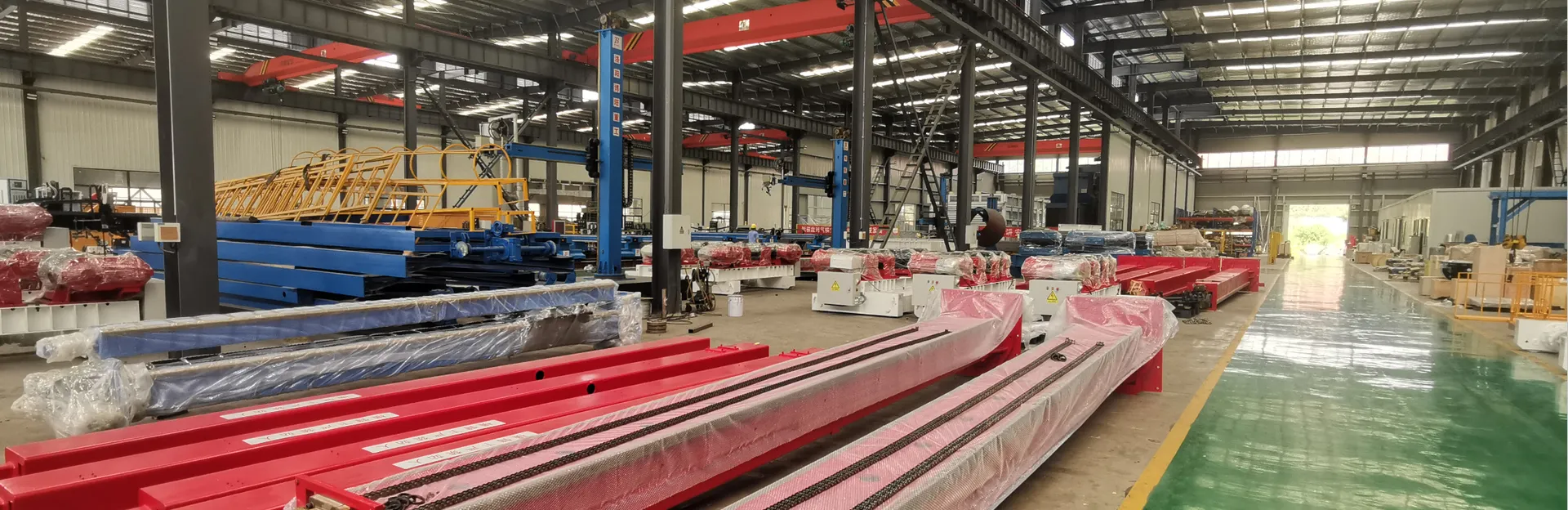
Supporting 20-meter tower sections over long spans without sagging is a critical challenge in modern industrial construction, particularly for wind turbine towers, communication masts, and heavy structural assemblies. Standard rotators often fail to maintain rigidity under such loads, leading to misalignment, increased stress, and costly rework. BOTA has engineered a specialized long-span rotator that addresses this problem head-on, combining advanced material science with precision manufacturing to deliver zero-sag performance across extended distances. This article examines the technical principles, comparative advantages, and real-world applications of BOTA's solution, helping engineers and procurement professionals make informed decisions for demanding projects.
When handling tower sections that exceed 15 meters, traditional rotators face two fundamental issues: deflection under self-weight and dynamic instability during rotation. The longer the span, the greater the bending moment at the center, causing the rotator beam to sag. This sag not only misaligns the tower section but also creates uneven load distribution that can damage both the rotator and the workpiece. Conventional designs rely on heavier beams or additional intermediate supports, which increase overall weight, reduce rotation speed, and complicate floor layouts.
Standard rotators are typically optimized for spans under 10 meters. Beyond that, manufacturers often add stiffeners or increase beam cross-sections, but this approach quickly reaches diminishing returns. The added mass increases rotational inertia, requiring larger drive motors and stronger foundations. Moreover, the sag remains a problem because the beam's moment of inertia is not efficiently distributed along the entire length. Field measurements show that a conventional rotator supporting a 20-meter tower section can exhibit sag of 15–25 mm at the midpoint, which is unacceptable for precision welding or assembly tasks.
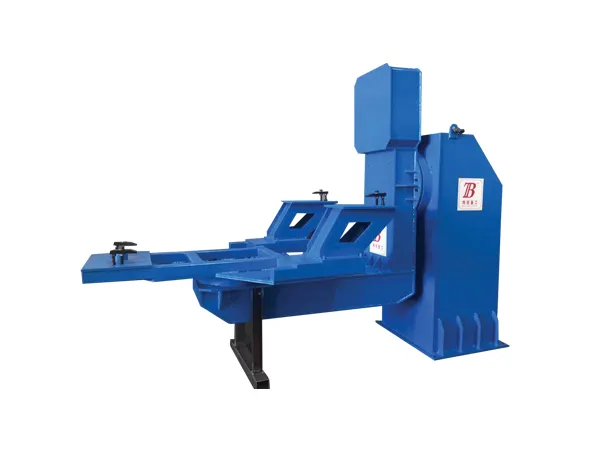
BOTA's long-span rotator achieves zero measurable sag for 20-meter tower sections through a combination of advanced structural geometry, high-strength alloy steel, and a patented tensioning mechanism. The key innovation lies in the pre-stressed beam design: each rotator beam is manufactured with an initial upward camber that exactly counteracts the anticipated deflection under maximum load. When the tower section is placed, the beam flattens to a perfectly straight line. This camber is calculated using finite element analysis (FEA) and verified by laser alignment during production.
BOTA uses a proprietary high-strength low-alloy (HSLA) steel with yield strength exceeding 690 MPa, combined with a box-girder cross-section that maximizes stiffness-to-weight ratio. The welds are 100% ultrasonic tested, and each rotator undergoes a full load test with a 20-meter dummy section before shipment. The result is a rotator that weighs only 15% more than a standard 10-meter model but delivers twice the span without any sag.
To maintain alignment during rotation, BOTA integrates dual servo-motors with anti-backlash gears and a closed-loop position control system that compensates for any thermal expansion or external forces. The rotator can hold position within 0.1 mm during welding or assembly operations. Optional laser height sensors provide real-time feedback to the operator, confirming zero sag throughout the rotation cycle.
For project engineers evaluating rotator options, BOTA's long-span design offers measurable benefits that directly impact cost, quality, and schedule. The table below compares critical parameters:
These advantages translate into lower total cost of ownership and higher production reliability for tower fabricators.
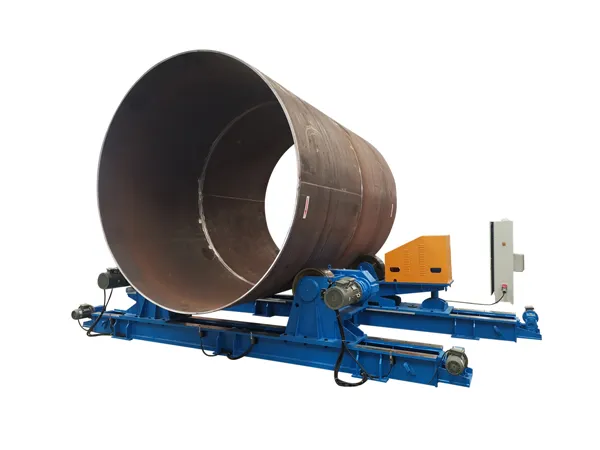
BOTA's long-span rotator has been deployed in three major wind turbine tower manufacturing facilities in Europe and Asia since 2022. In one documented case, a factory producing 80-meter towers (segmented into four 20-meter sections) replaced its previous rotator system with two BOTA units. The result: alignment errors dropped from an average of 3 mm to less than 0.5 mm, rework time decreased by 70%, and overall cycle time per tower section shortened by 25%. The rotators have operated over 5,000 hours without any sag-related issues or unscheduled downtime.
Independent testing by a third-party engineering firm confirmed that the BOTA rotator's sag at 20-meter span under 30-ton load was less than 0.5 mm, well within the project tolerance of 2 mm. The test report is available to qualified buyers upon request.
Q: How does BOTA ensure the camber remains accurate over years of use?
A: The beam is stress-relieved after welding and then pre-stressed with a controlled tensioning rod system. Annual recalibration using the built-in laser reference takes less than one hour and ensures the camber stays within tolerance for the entire 20-year design life.
Q: Can the rotator handle off-center loads?
A: Yes. The control system automatically adjusts drive torque distribution to compensate for unbalanced loads up to 15% of the rated capacity. For larger imbalances, an optional active counterweight system is available.
Q: What foundation requirements are needed?
A: BOTA provides detailed anchor plans and load specifications. A typical installation requires a reinforced concrete slab of 300 mm thickness with hold-down bolts, though lighter foundations may suffice after engineering review.
Q: Is retrofitting possible in existing production lines?
A: Absolutely. BOTA offers custom mounting brackets and adapter plates to fit most existing floor layouts. On-site installation and commissioning typically take three to five days.
For projects requiring long-span tower section handling, BOTA's rotator eliminates the sagging problem that has plagued traditional systems. By combining precision engineering with robust construction, it offers a reliable, cost-effective solution that improves product quality and operational efficiency. Contact BOTA's engineering team today to discuss your specific span requirements and receive a detailed proposal backed by over a decade of experience in heavy-duty positioning systems.
No. 1 Intersection of Chuangye Avenue and Weilai Avenue,
Yiyang County,Luoyang City, Henan Province, China
+86 400-0379-069
Copyright © 2023 An Automated Welding and Cutting Equipment Manufacturer Focusing on Welding Column Boom and Welding Rotator | All Rights Reserved Technical support: ShangXian