
Pipe Welding Rotator Setup Tips for Cleaner Seams
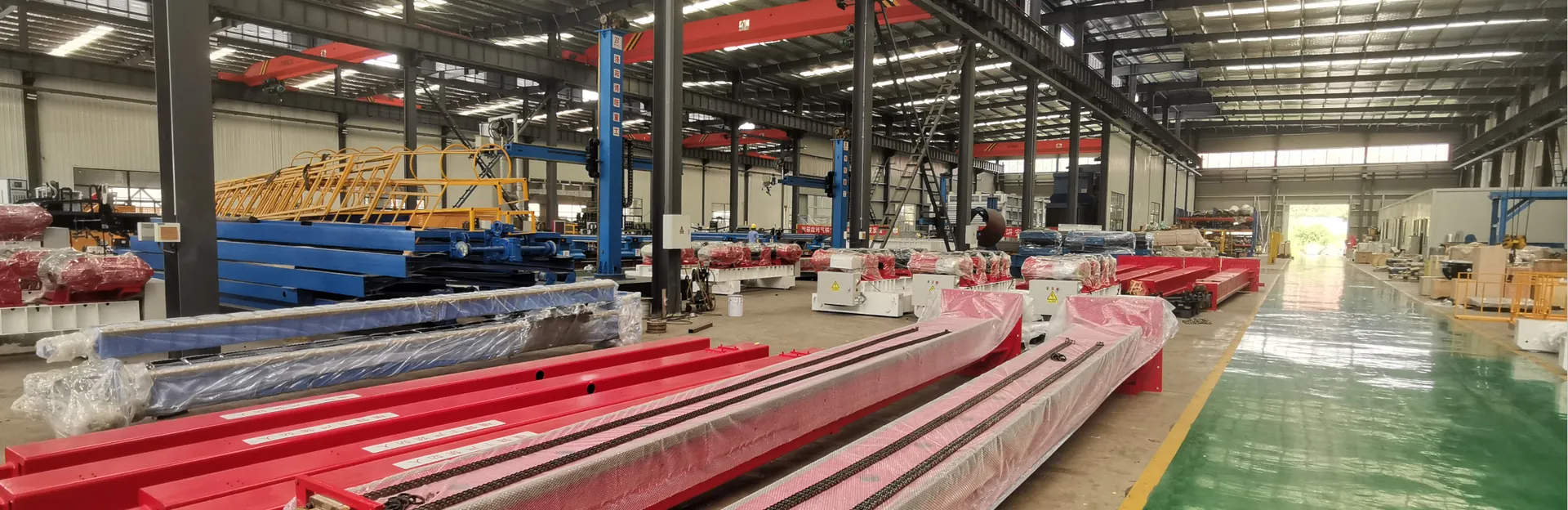
A clean weld seam rarely happens by accident. It comes from a stable arc, a steady travel speed, and a pipe that turns without wandering, slipping, or shaking. All three depend on how well the welding rotator is set up before the first arc is struck. Misalignment, uneven roller pressure, or a rotation speed that drifts mid-pass will undo even the steadiest hand. The adjustments below cover the sequence experienced welders follow to get a pipe welding rotator running true, from leveling the base frame to matching rotation speed to the welding process.
Everything downstream of the base frame inherits its errors. A rotator sitting on an uneven floor will tilt the pipe, and a tilted pipe pulls the weld pool to one side of the joint. Before touching any control, confirm the mounting surface is flat and the frame is not rocking on a high spot.
On equipment with adjustable wheelbases, loosen the locking hardware before making any lateral shift and retighten it evenly afterward. Forcing a misaligned carriage with the clamp bolts is a fast way to warp the frame and lose the alignment again within a few rotations.
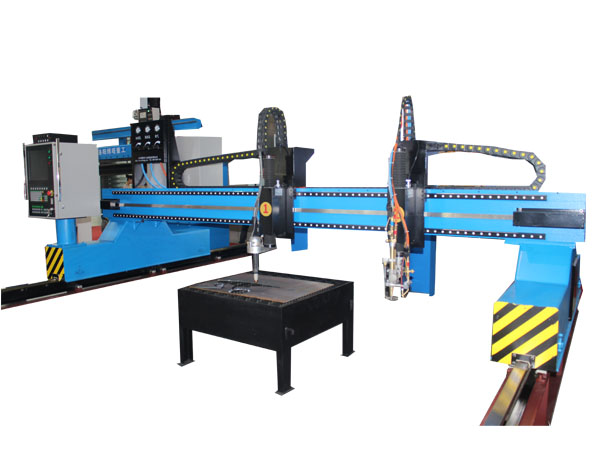
Roller spacing controls how much of the pipe circumference is supported and how much friction the drive can develop. Set the wheels too far apart and the pipe sags between them, opening the joint on the top side. Set them too close and the pipe sits high, contacts only a narrow band of each wheel, and slips under load.
The practical target is a contact angle between roughly 45 and 60 degrees from horizontal, which puts the pipe weight low and centered. Larger diameters need wider spacing; small diameters need the wheels brought in so the pipe does not rock between them.
Clean wheel surfaces matter here too. Grinding dust, spatter, and oil build up a glaze that reduces grip and causes intermittent slip, which shows up in the weld as a stutter or a change in bead width.
Rotation speed is the single setting most likely to be wrong at the start of a job. Too fast and the weld pool runs ahead of the arc, producing an uneven bead and inconsistent penetration. Too slow and heat builds in one spot, risking burn-through on thin wall pipe and a wide, sagging bead on thick sections.
Set speed from the process, not from habit. A rule that works in most shops is to start conservative and increase until the bead profile is consistent around the full circumference, then hold that setting for the rest of the run. Submerged arc and high-deposition MIG runs tolerate faster rotation than TIG or root passes on thin wall material.
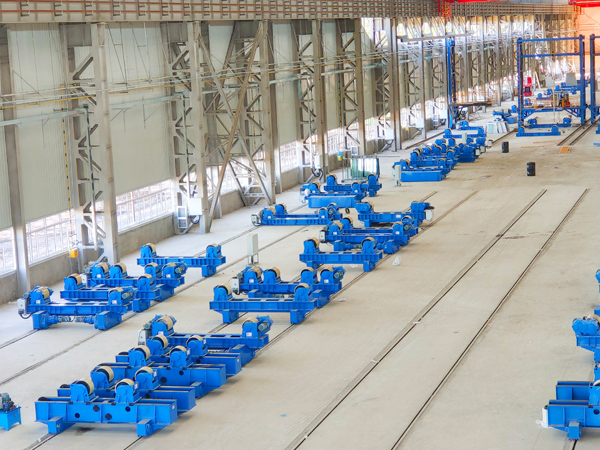
A pipe that creeps along its axis during rotation will pull the torch off the joint line. On a multi-pass joint, drift of a few millimeters per revolution compounds quickly and turns a clean seam into a stepped one that needs grinding.
Drift usually comes from one of four sources: a pipe end that was not cut square, an out-of-round pipe, mismatched roller diameters, or uneven wheel pressure on one side. Check the pipe first, then the machine. Square-cut ends and consistent wall thickness solve more drift problems than any adjustment to the rotator itself.
For long or heavy sections, a guide roller or thrust wheel set against the pipe face will hold axial position without adding significant drag. Adjust it to touch, not to press, since side loading pushes the pipe off the wheel centerline and reintroduces the wobble you are trying to remove.
A rotator that produced clean seams last month can quietly degrade. Rollers wear, chains stretch, and bearings lose preload. The symptoms show up as vibration in the arc, uneven bead width, or a pipe that hums as it turns.
Check wheel hardness and profile every few months, tension drive chains or belts, and lubricate bearings on the schedule recommended by the builder. Wipe wheels down at the end of a shift so spatter and metal dust do not compact into the surface. On machines used for stainless or aluminum, keep carbon steel dust away from the wheels and the pipe to avoid cross-contamination that later shows up as rust spots on a finished weld.
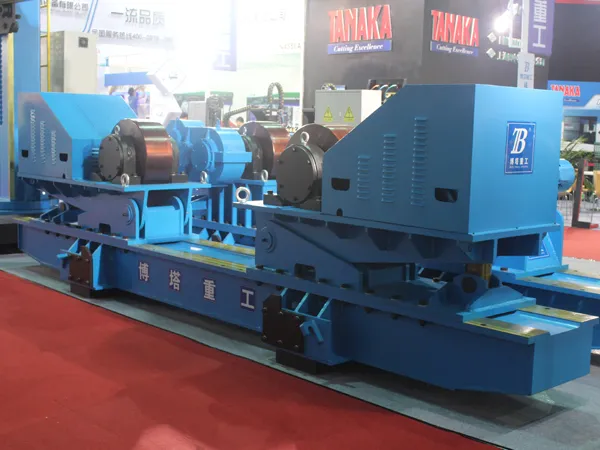
There is a limit to how much adjustment can fix a machine that flexes under load. A frame that twists, a drive with coarse speed steps, or rollers that cannot be brought into parallel will keep producing inconsistent seams no matter how carefully the operator works. For shops running a range of diameters and wall thicknesses, the practical answer is a rotator with rigid frame construction, independently adjustable roller carriages, and true variable speed control.
BOTA builds pipe welding rotators around those three priorities, with capacity ratings matched to realistic pipe weights so the drive holds speed under load instead of sagging as the pass begins. When evalating a unit, compare load capacity against the heaviest pipe you actually weld, confirm the speed range covers both your root passes and your fill passes, and check that roller adjustment is tool-friendly enough that setup does not become a two-person job.
Speed depends on process, wall thickness, and joint position. Start slower than you think is necessary, watch the bead profile, and increase until the weld is consistent around the circumference. The correct setting is the one that holds that consistency for the entire pass, not the highest number the drive will reach.
Check for an out-of-square pipe end or an out-of-round section first. If the pipe is true, verify that both rollers sit at the same height and that wheel pressure is even. A guide roller set lightly against the pipe face will hold axial position on long sections.
Not for every job, but any change in pipe diameter, wall thickness, or weight deserves a check of roller spacing, speed setting, and level. Recording the settings that worked for a given pipe size saves time on repeat work and keeps seam quality consistent across operators.
Clean seams come from a setup that removes variables. Level the frame, space the rollers to the diameter, match speed to the process, and control drift before the arc starts. Do those four things consistently and the weld quality follows, with less grinding and fewer repairs on every joint that leaves the station.
Self-Aligning vs Conventional Welding Rotators Explained
No information
No. 1 Intersection of Chuangye Avenue and Weilai Avenue,
Yiyang County,Luoyang City, Henan Province, China
+86 400-0379-069
Copyright © 2023 An Automated Welding and Cutting Equipment Manufacturer Focusing on Welding Column Boom and Welding Rotator | All Rights Reserved Technical support: ShangXian