
Ensuring Workplace Safety: Advanced Risk Control Strategies for Large-Scale Head and Tailstock Positioners
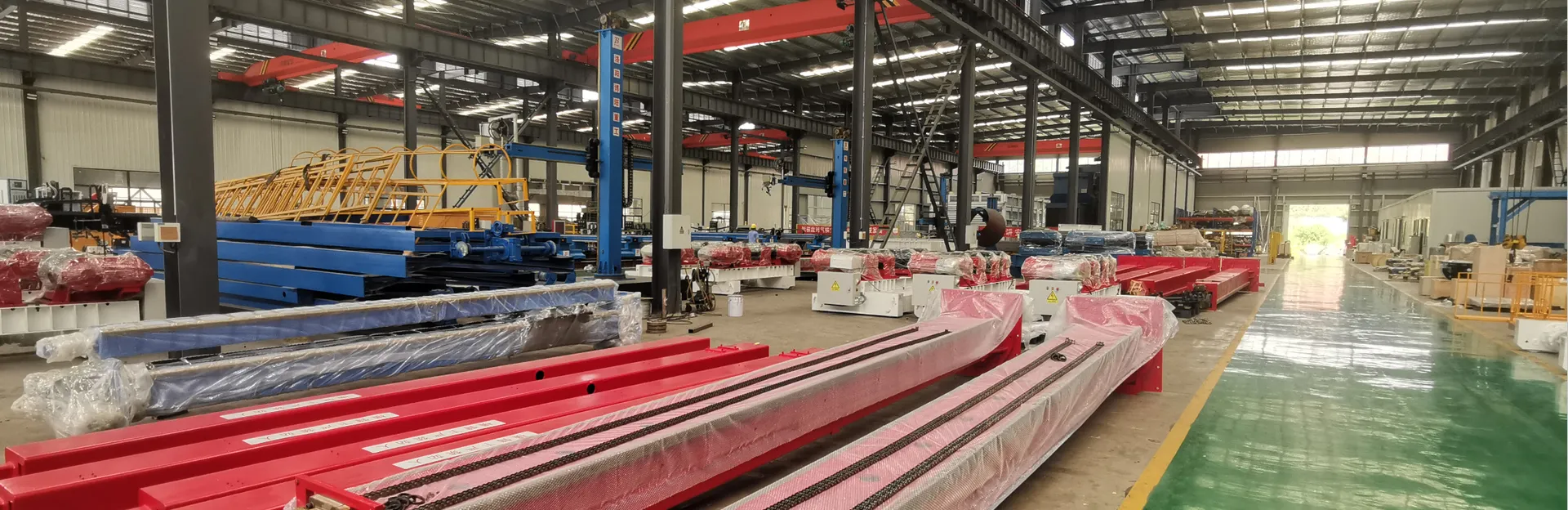
In heavy-duty fabrication workshops, particularly those involved in structural steel manufacturing, pressure vessel production, and large-scale welding assemblies, head and tailstock welding positioners are not just auxiliary equipment—they are central to operational efficiency. These systems enable controlled rotation and precise positioning of oversized workpieces, allowing operators to maintain optimal welding angles and machining accuracy. However, while they significantly improve productivity, they also introduce a layer of risk that cannot be overlooked.
For many manufacturers, safety challenges do not arise from lack of awareness, but from inconsistent execution of safety procedures in high-pressure production environments. Therefore, implementing a structured, experience-driven safety framework is no longer optional—it is a necessity for sustainable operations.
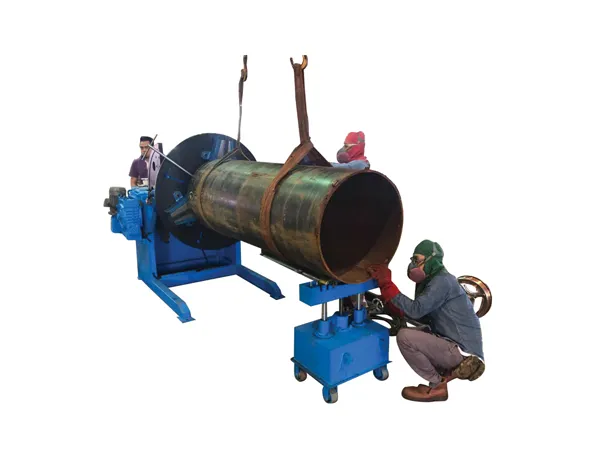
Unlike smaller positioning devices, large-scale head and tailstock systems operate under extreme loads and torque conditions. A single misstep can result in serious consequences. The most common hazards observed in real industrial environments include:
Uncontrolled rotational inertia when handling asymmetrical or improperly balanced workpieces
Mechanical slippage caused by insufficient clamping force or worn fixtures
Pinch and crush points between rotating components and fixed structures
Electrical system failures, especially in older or poorly maintained equipment
Hydraulic or servo malfunction, leading to sudden and unexpected movement
From a practical standpoint, these risks are often compounded by human factors such as fatigue, inadequate communication, or over-reliance on automation systems.
Operator Competency Beyond Basic Training
It is not enough for operators to simply “know how to use” the equipment. In high-load applications, operators must understand:
Load distribution principles
Equipment torque limits
Emergency response timing
System feedback signals (noise, vibration, resistance changes)
Experienced operators often identify potential failures before they occur—not through alarms, but through subtle changes in machine behavior. This level of awareness should be cultivated through continuous training, not one-time certification.
Equipment Inspection as a Daily Discipline
Routine inspection should move beyond a checklist mentality. Instead, it should be treated as a diagnostic process. Key focus areas include:
Micro-cracks in structural welds of the positioner frame
Gradual loosening of tailstock alignment mechanisms
Hydraulic pressure consistency and leakage points
Electrical cabinet temperature and wiring integrity
Ignoring these details may not cause immediate failure, but they significantly increase long-term operational risk.
Controlled Workspace Planning
A well-organized work area is often underestimated as a safety factor. In practice, many incidents occur not because of machine failure, but due to:
Unauthorized personnel entering rotation zones
Tools left within swing radius
Poor visibility or insufficient lighting
Establishing clearly marked safety boundaries and enforcing access control can dramatically reduce preventable accidents.
Correct Mounting Is a Non-Negotiable Step
Improper mounting remains one of the leading causes of operational accidents. Even minor misalignment can create uneven rotational force, leading to:
Equipment vibration
Fixture fatigue
Sudden workpiece displacement
Experienced operators often perform a “test rotation” at minimal speed to confirm balance before proceeding. This small step can prevent major failures.
In real-world applications, excessive speed is rarely necessary. High-performing workshops prioritize stability over speed. Gradual acceleration allows operators to:
Detect imbalance early
Monitor structural response
Adjust parameters in real time
This approach not only improves safety but also enhances weld quality and machining precision.
While personal protective equipment is essential, it should not be treated as the primary safety solution. Instead, PPE serves as a backup when all other controls are properly implemented. Standard gear should include:
Impact-resistant eye protection
Heat-resistant gloves
Anti-slip, steel-toe footwear
Flame-retardant clothing in welding environments
However, reliance on PPE without addressing root risks often leads to a false sense of security.
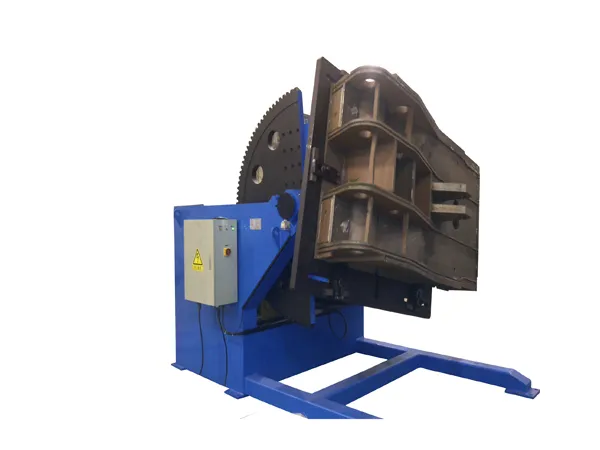
Modern positioners are equipped with interlocks, overload protection, and sensor-based controls. Bypassing these systems—often done to “save time”—is one of the most dangerous practices observed in manufacturing facilities.
From a compliance and liability perspective, disabling safety mechanisms can also expose companies to significant legal and financial risks.
Even in well-managed environments, unexpected incidents can occur. What differentiates a minor incident from a major accident is response readiness.
Operators should be able to:
Locate and activate emergency stop systems instantly
Identify safe disengagement procedures
Communicate effectively with nearby personnel
Additionally, facilities should maintain clearly visible emergency protocols, functional fire suppression systems, and accessible first-aid resources.
A positioner that operates smoothly today may become a safety hazard tomorrow without proper maintenance. Preventive maintenance should include:
Scheduled lubrication of rotational components
Periodic calibration of alignment systems
Replacement of worn clamping devices
Inspection of servo motors and control units
Equally important is documentation. Maintenance records not only support compliance but also provide valuable data for predicting future failures.
Technology and procedures alone cannot guarantee safety. The most reliable safeguard is a workforce that actively prioritizes it.
Companies that achieve this typically:
Encourage reporting of near-miss incidents
Conduct regular safety reviews and workshops
Empower operators to halt unsafe operations without penalty
Integrate safety metrics into performance evaluations
When safety becomes part of daily decision-making rather than a formal requirement, risk levels drop significantly.
Large-scale head and tailstock positioners are essential tools for modern heavy manufacturing, but their safe operation requires more than standard procedures. It demands a combination of technical understanding, disciplined execution, and a proactive safety mindset.
By focusing on detailed inspections, controlled operation, continuous training, and preventive maintenance, manufacturers can significantly reduce operational risks. More importantly, they can create an environment where efficiency and safety reinforce each other rather than compete.
Call to Action
If you are looking to improve the safety and performance of your industrial equipment operations, explore our in-depth Industrial Equipment Safety Guides. Stay aligned with evolving industry standards, reduce operational risks, and ensure that every project is completed with both precision and confidence.
No. 1 Intersection of Chuangye Avenue and Weilai Avenue,
Yiyang County,Luoyang City, Henan Province, China
+86 400-0379-069
Copyright © 2023 An Automated Welding and Cutting Equipment Manufacturer Focusing on Welding Column Boom and Welding Rotator | All Rights Reserved Technical support: ShangXian