
Choosing the Right Rotation Speed for TIG vs MIG Welding Processes: A Comprehensive Guide
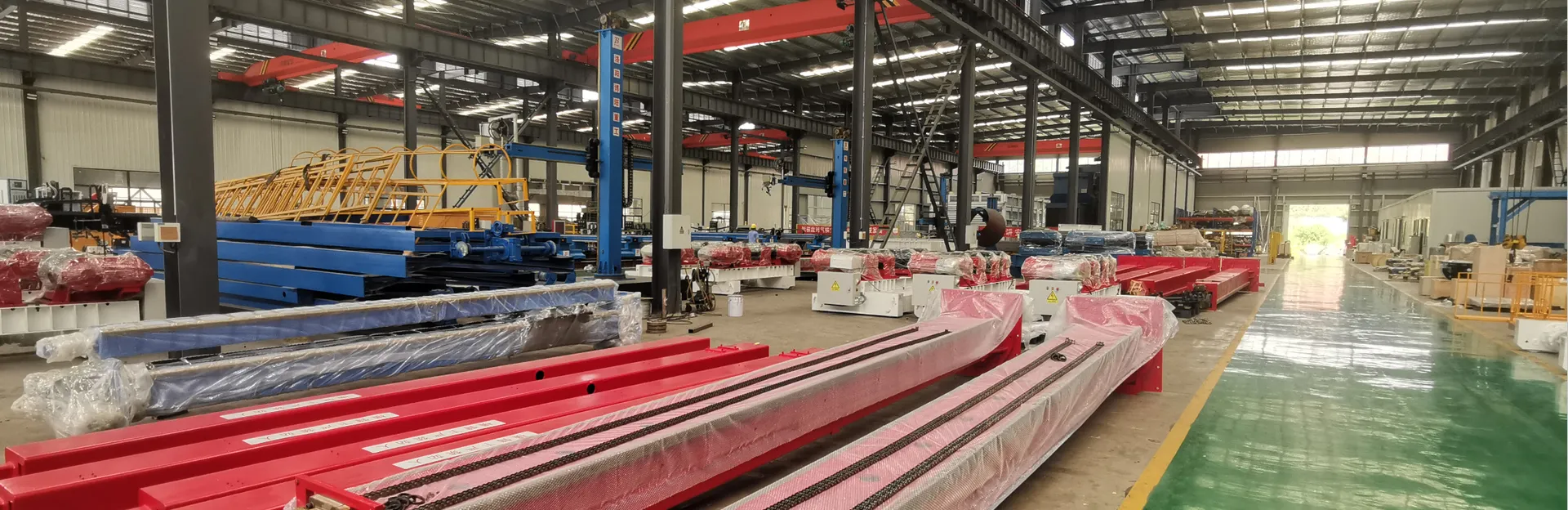
Before diving into rotation speeds, it is essential to understand the fundamental differences between TIG and MIG welding.
TIG Welding: TIG welding involves using a non-consumable tungsten electrode to produce the weld. Filler material is added separately if needed, and an inert gas, usually argon, protects the weld pool from contamination. TIG welding is known for its precision, high-quality welds, and versatility across materials like stainless steel, aluminum, and copper alloys. However, it requires a higher skill level and slower operation compared to MIG welding.
MIG Welding: MIG welding, by contrast, uses a consumable wire electrode that melts continuously and forms the weld. An inert or semi-inert shielding gas is employed to protect the molten metal. MIG welding is faster and more suitable for high-production environments. Its ease of use makes it popular for thicker materials and long, continuous welds, although achieving the same aesthetic precision as TIG can be challenging without proper technique.
Understanding these differences is key because the optimal rotation speed in each process depends on the interaction between the electrode, filler material, and the weld pool.

Rotation speed refers to the circular or oscillatory motion of the electrode or torch across the weld joint. While it may seem like a minor detail, it profoundly affects:
Heat Distribution: Proper rotation helps distribute heat evenly along the weld joint, reducing the risk of burn-through, warping, or undercutting.
Penetration Depth: Rotation speed affects how deeply the weld penetrates the base material, impacting structural integrity.
Bead Appearance: Consistent motion ensures uniform bead width and smooth, aesthetically pleasing welds.
Porosity and Defects: Incorrect rotation can trap gases or create inconsistent shielding, resulting in porosity and weak welds.
TIG welding demands a delicate balance between precision and heat input. Since the process is slower and more controlled, rotation speeds must be carefully selected:
Thin Materials (<3 mm): Use a slower rotation speed, approximately 0.5–1 inch per second. A slower motion prevents burn-through and maintains weld pool stability. Oscillating slightly back and forth can help produce a uniform bead while avoiding excessive heat concentration.
Medium Materials (3–6 mm): Moderate rotation speeds, around 1–2 inches per second, are recommended. This allows adequate penetration while preserving the fine control that TIG offers.
Thick Materials (>6 mm): Faster oscillation, approximately 2–3 inches per second, may be required to ensure full penetration. However, this should be accompanied by appropriate amperage adjustments to maintain weld pool consistency.
In TIG welding, rotation patterns—such as circular, figure-eight, or weave—can also complement speed adjustments, particularly for complex joints or multi-pass welds.
MIG welding’s continuous feed wire makes it less sensitive to extremely slow motion, but consistent rotation still enhances weld quality:
Thin Materials (<3 mm): Slow and steady motion at about 0.75–1.5 inches per second works best. MIG welding on thin materials risks burn-through if the torch is moved too slowly.
Medium Materials (3–6 mm): A moderate speed of 1.5–2.5 inches per second ensures proper fusion and bead consistency.
Thick Materials (>6 mm): Faster rotation speeds, up to 3 inches per second or slightly more depending on wire feed rate, help prevent overheating of the weld area and reduce spatter. Weaving patterns, such as the zigzag motion, can be employed to increase bead width without compromising penetration.
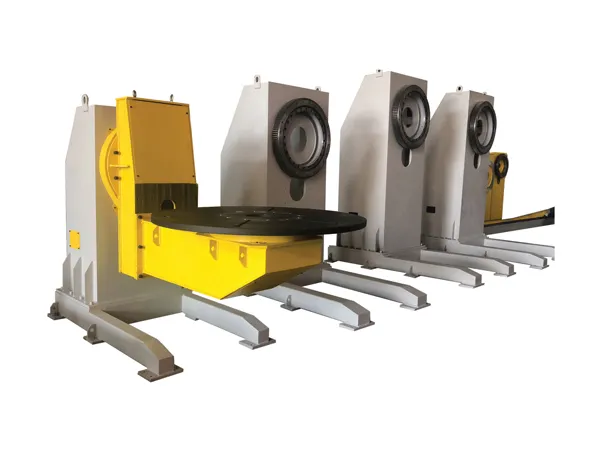
Match Speed with Amperage: Higher amperage generally requires faster rotation to prevent overheating. Conversely, lower amperage allows for slower motion and more precise control.
Consider Material Type: Aluminum and other high-conductivity metals dissipate heat quickly, requiring slower rotation in TIG welding. Steel, with lower thermal conductivity, can tolerate slightly faster motion.
Adapt to Joint Geometry: Complex joints or corners may necessitate slower, more controlled rotation, while straight welds allow faster motion.
Trial and Adjustment: Always test on scrap material to fine-tune rotation speed and motion before committing to the final piece.
Choosing the correct rotation speed for TIG versus MIG welding is not merely a technical detail; it is a fundamental factor that affects the weld’s strength, appearance, and overall quality. TIG welding requires slower, more deliberate rotation to maintain precision and control, whereas MIG welding allows faster, more continuous motion suitable for thicker materials and higher production rates. By understanding the relationship between material thickness, heat input, and electrode motion, welders can optimize both processes for superior results. Investing the time to master rotation speed adjustments ensures longer-lasting welds, higher efficiency, and a professional finish that meets both aesthetic and structural standards.
For manufacturers, fabricators, and hobbyists aiming to elevate their welding quality, paying attention to rotation speed is a simple yet powerful way to achieve consistent and reliable outcomes.
No. 1 Intersection of Chuangye Avenue and Weilai Avenue,
Yiyang County,Luoyang City, Henan Province, China
+86 400-0379-069
Copyright © 2023 An Automated Welding and Cutting Equipment Manufacturer Focusing on Welding Column Boom and Welding Rotator | All Rights Reserved Technical support: ShangXian