
Welding Rotator Load Capacity: How to Match Tonnage
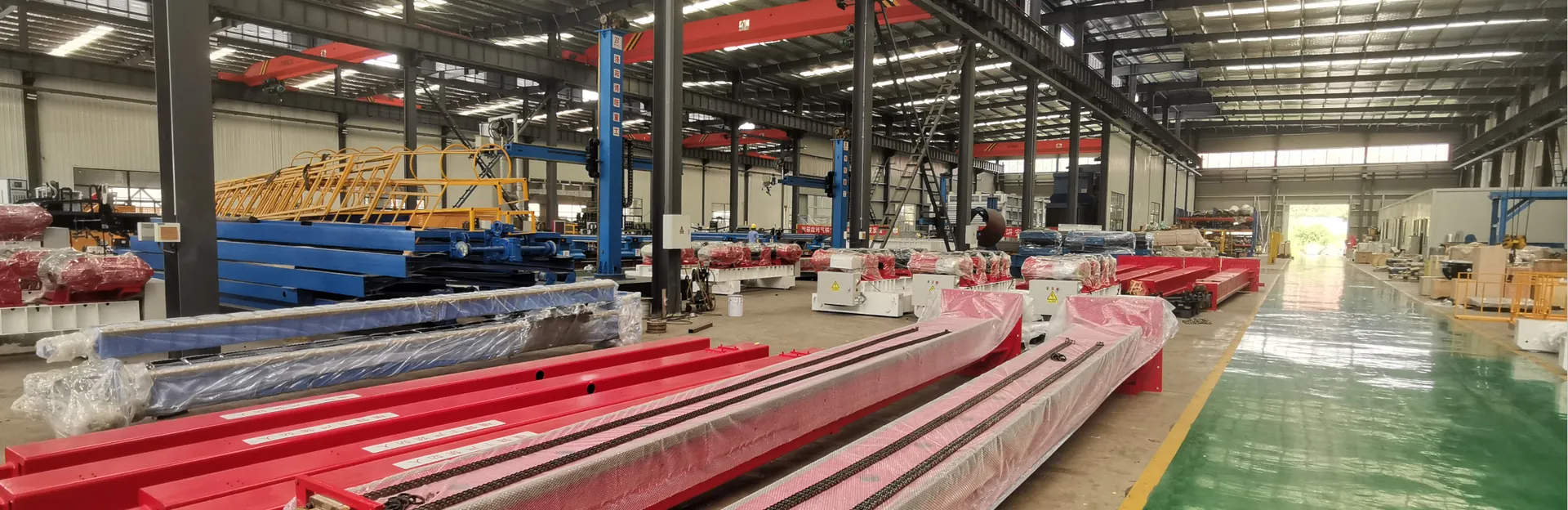
Choosing a welding rotator is not a matter of ordering the largest tonnage your budget allows. Load capacity defines what a rotator can carry, turn, and hold in position without slipping, stalling, or overstressing its wheels. An undersized unit lets the workpiece creep, flattens the roller path, and puts the drive under constant strain. An oversized unit adds cost, footprint, and power consumption, and can actually be harder to control on small-diameter work. Matching tonnage correctly starts with an honest weight calculation and ends with a realistic look at how that weight is shared across the wheels.
The headline tonnage on a datasheet is a working load rating: the total mass the rotator is designed to support and rotate continuously under normal operating conditions. It is not a single, universal number, and two rotators rated at the same tonnage can behave very differently depending on how that rating is defined.
Manufacturers typically publish a working load for continuous rotation and a higher static or test load that the frame and wheels can withstand without rotation, such as during a hydrostatic test or a lift-and-set operation. Never treat the test figure as a production capacity. If a vessel is going to be rotated for hours of welding, the working load is the only figure that matters.
A conventional rotator carries the workpiece on four points: two wheels on the drive unit and two on the idler. A 60-ton rating therefore does not mean 60 tons at any single wheel. It means the load is distributed across the wheel set according to the vessel center of gravity, the included angle between the wheels, and the stiffness of the frame. Off-center loads, long overhangs, and vessels supported near their ends shift weight onto one unit and can exceed its share of the rating even when the total weight is within limits.
Rotating a balanced cylinder slowly is the easiest duty a rotator performs. Rotating a vessel with an offset center of gravity, a heavy nozzle bundle, or internal trays that shift during turning is a dynamic duty that demands more torque and more grip. Tonnage alone will not tell you whether the drive can handle that.
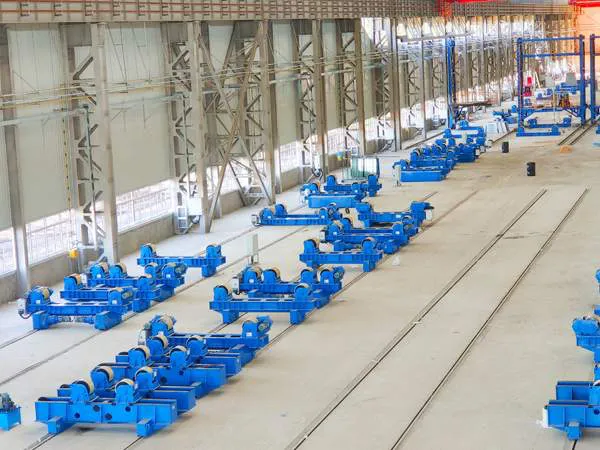
Most tonnage mismatches begin with an incomplete weight estimate. The shell is only the starting point.
Add these figures honestly and then check the center of gravity. A vessel whose mass sits well off the axis of rotation is a harder job than a symmetrical one, even at identical total weight.
A common practice is to select a rotator whose working load exceeds the calculated weight by roughly 20 to 30 percent. That margin absorbs the weight growth that happens on almost every project: a late nozzle, extra cladding, a heavier lifting lug.
The second check is per-wheel load. When the total weight is divided between the drive and idler units and across the wheels in each unit, each contact point sees a fraction of the total. Wheel material matters here. Polyurethane wheels protect the workpiece surface and grip well on painted or polished shells, while steel wheels resist wear under heavy point loads. Wheel diameter, tire hardness, and the included angle all change the contact pressure, and excessive pressure deforms the wheel and marks the vessel.
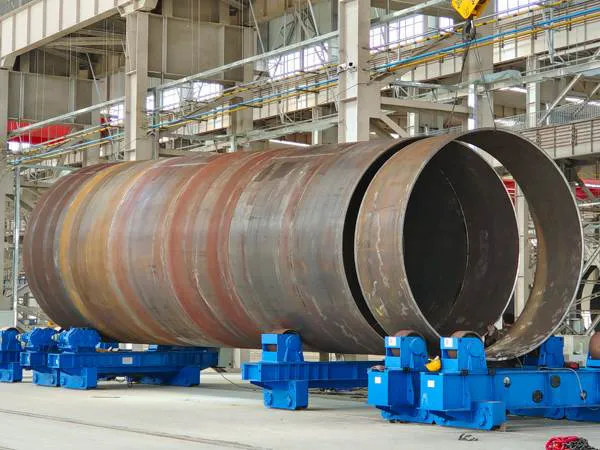
Two vessels of the same weight can demand completely different rotators. A thick-walled, small-diameter drum concentrates its weight on a narrow contact band and needs high wheel load capacity. A large-diameter, thin-wall shell spreads the load but needs far more torque to turn, because the required torque rises with the distance from the axis to the contact point.
If the weight calculation and the diameter requirement point to different sizes, the larger of the two governs. This is the most common situation in pressure vessel and tank fabrication, where the workpiece is light but very large, or heavy but small. In these cases the sensible move is to size by the binding constraint and confirm the drive torque with the manufacturer rather than assume tonnage covers it.
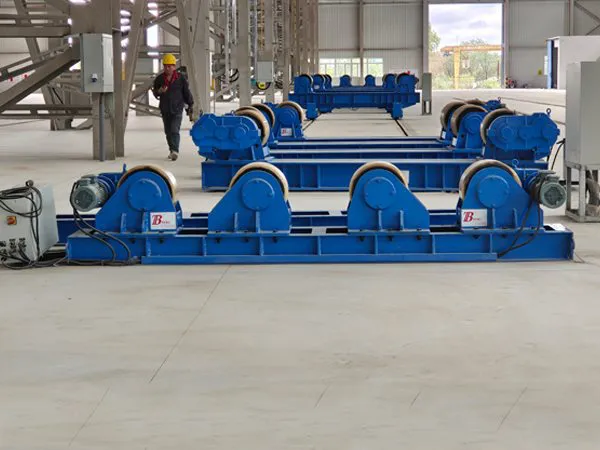
BOTA builds welding rotators across a wide capacity range, and the engineering conversation matters as much as the tonnage number. Sharing workpiece drawings, weight breakdowns, and the heaviest test condition lets BOTA confirm wheel loading, drive torque, and control configuration before an order is placed, so the unit that arrives matches the work that will actually be rotated.
It is technically within the rating, but it leaves no room for weight growth, off-center loading, or future attachments. Most fabricators prefer a 20 to 30 percent margin so the rotator is not operating at its limit on every job.
Test loads are usually higher than welding loads because of the water weight. Check the static or test rating separately and do not assume the working load rating covers the test condition.
No. Excess capacity adds cost and can reduce control sensitivity on small-diameter work. The right size covers the heaviest realistic condition with a sensible margin and is matched to the diameter and torque demand.
Diameter drives torque rather than weight. A large, light shell may sit well within the tonnage rating but still need a more powerful drive to rotate smoothly and hold position.
Matching welding rotator load capacity to tonnage comes down to three numbers: the real weight of everything that rotates, the heaviest condition the machine will face, and the torque that diameter and speed demand. Get those right, add a reasonable margin, and confirm wheel loading with the manufacturer. The tonnage on the nameplate is a promise about the whole system, not just the frame, and it holds only when the load is understood as clearly as the rating.
How to Choose a Welding Rotator for Heavy Pipe Fabrication
No information
No. 1 Intersection of Chuangye Avenue and Weilai Avenue,
Yiyang County,Luoyang City, Henan Province, China
+86 400-0379-069
Copyright © 2023 An Automated Welding and Cutting Equipment Manufacturer Focusing on Welding Column Boom and Welding Rotator | All Rights Reserved Technical support: ShangXian