
Welding Rotator Price Guide 2026: Comprehensive Cost Breakdown, Market Insights, and Buying Tips
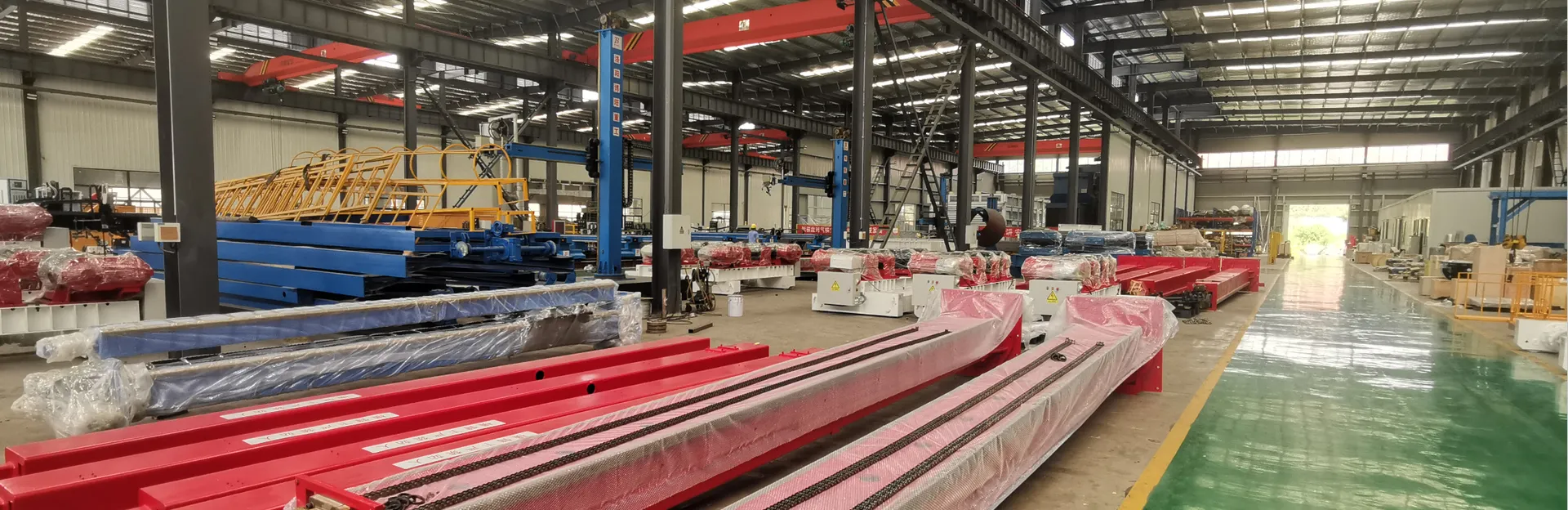
Welding rotators have become a core piece of equipment in modern fabrication workshops, particularly in industries dealing with tanks, pipes, pressure vessels, and cylindrical components. A reliable rotator not only improves weld uniformity but also increases safety and overall production efficiency.
However, welding rotator prices vary significantly depending on configuration, capacity, and technical features. For buyers—whether manufacturers, contractors, or workshop owners—understanding these cost drivers is essential to making a smart, long-term investment.
This 2026 guide provides a deeper look into the factors influencing welding rotator pricing, current market trends, and practical advice that can help you optimize both budget and performance.
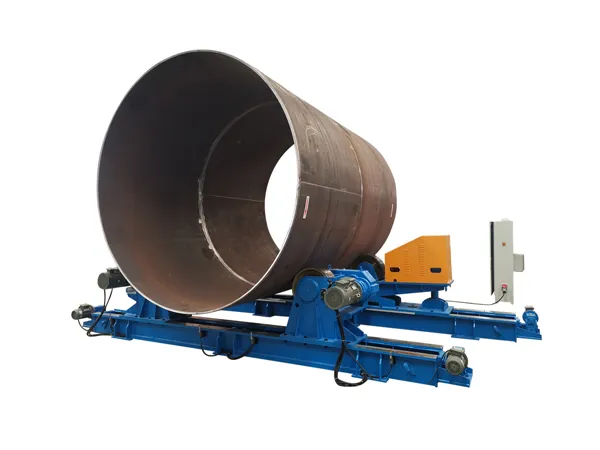
Welding rotators have a wide pricing spectrum depending on load capacity, feature set, and manufacturing origin. Below is a general reference range seen in the current market(2025–2026):
▸ Light-duty rotators (1–20 tons)
Price range: USD 800 – 6,000
Used for small tanks, pipes, laboratory fabrication, and light industrial tasks.
▸ Medium-duty rotators (20–100 tons)
Price range: USD 6,000 – 18,000
Popular among pressure-vessel workshops, machinery factories, and general steel fabrication.
▸ Heavy-duty rotators (100–500 tons)
Price range: USD 18,000 – 80,000
Built for large industrial boilers, chemical tanks, offshore pipes, wind-power towers.
▸ Ultra-heavy rotators (500+ tons)
Price range: USD 80,000 – 200,000+
Customized builds with dual-drive systems and advanced automation.
Note: Price differences also depend on brand reputation, country of origin, and customization level.
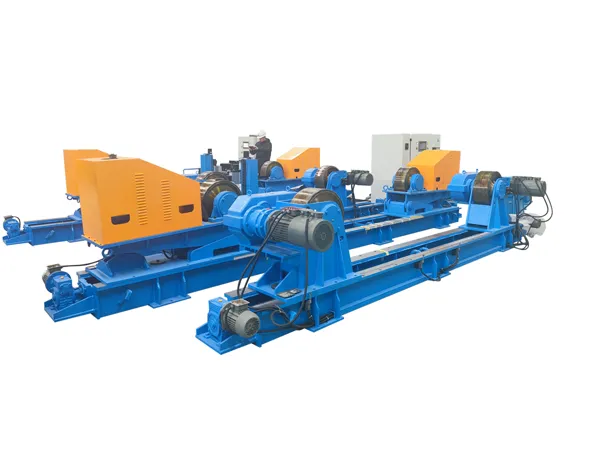
2.1 Load Capacity & Workpiece Dimensions
Load capacity remains the strongest cost driver. As load increases, manufacturers must use
Larger gearboxes
Higher torque motors
Reinforced structural frames
Precision bearings
These upgrades significantly increase production cost.
Industry Insight:
Workshops often underestimate their future capacity needs. Choosing a rotator with 20–30% higher capacity than current demands reduces replacement risk and ensures safety for oversized workpieces.
2.2 Motor Type, Power, and Control System
• AC Motors
More economical
Suitable for general welding tasks
Lower precision
• DC Motors
Better speed control
Strong torque output
Ideal for automated welding
• Servo & Variable Frequency Drive (VFD) Systems
Premium-grade
Used in automated welding lines
Higher cost but better reliability
Expert Suggestion:
If your workshop handles stainless steel, aluminum, or precision welding, DC or servo systems significantly improve weld consistency and reduce rework.
2.3 Roller Material and Configuration
Rollers come in different materials:
Polyurethane rollers:
Protect workpiece surface
Quieter operation
Higher cost
Steel rollers:
Lower price
Best for heavy-duty loads
Less surface protection
Roller count also affects price
2-roll: economical, for general use
4-roll: better stability, widely used in high-end fabrication
Adjustable multi-roll: used for irregular cylinders
Real Workshop Scenario:
Wind tower manufacturing often uses self-aligning 4-roller rotators to handle diameter changes without manual adjustment.
2.4 Welding Rotator Frame & Build Quality
Material selection influences both lifespan and price.
Higher-priced models often feature:
Q345B or higher-grade structural steel
Laser-cut components for accuracy
CNC-machined shafts
Sealed bearings to reduce maintenance
Why this matters:
A well-built rotator reduces machine vibration, which directly affects weld uniformity.
2.5 Speed Control Options and Automation Level
Basic rotators offer fixed rotation speeds.
High-end models include:
Variable-speed digital control
Auto synchronization with welding column & boom
Remote control operation
PLC automation
For smart workshops:
Automation reduces manpower demands and aligns with modern Industry 4.0 welding standards.
2.6 Additional Features that Increase Price
Wireless remote controller
Automatic overload protection
Digital torque display
Hydraulic elevation or tilting
Synchronized twin-rotator systems
Workpiece centering system
These don’t apply to every workshop but dramatically enhance efficiency in high-volume production.
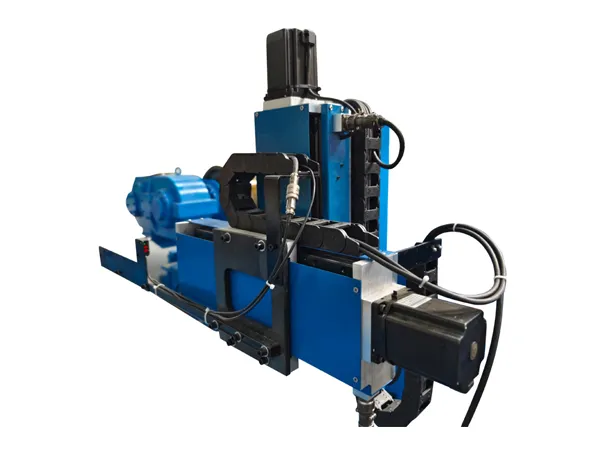
Step 1: Define Your Workpiece Parameters
Weight (minimum, maximum)
Diameter range
Surface material
Length
Step 2: Identify Your Welding Process
Manual welding
Submerged arc welding
TIG/MIG
Automated welding
Step 3: Evaluate Long-Term Usage, Not Just Current Jobs
Many workshops purchase rotators only to upgrade within 2–3 years due to increased production needs.
Recommendation:
Choose a rotator model that supports future expansion.
Step 4: Compare Materials & Electrical Components
European/Japanese electrical components cost more but offer better stability.
Step 5: Evaluate Supplier Capability
Consider:
Welding rotator manufacturing history
Quality certifications
On-site factory audit (if possible)
After-sales support & spare parts availability
Welding rotators are widely used in:
Pressure vessel fabrication
Petrochemical industry
Food & beverage tank manufacturing
Wind tower sections
Boiler workshops
Pipe production lines
Shipbuilding and offshore engineering
Example:
A pressure vessel manufacturer may use both self-aligning rotators and conventional rotators to handle different tank diameters without frequent manual adjustment, improving production efficiency by 25–40%.
Q1: How much weight should my welding rotator support?
Choose a capacity 20–30% above your heaviest workpiece.
Q2: Do I need polyurethane or steel rollers?
Polyurethane: stainless steel, painted surfaces
Steel: heavy-duty carbon steel cylinders
Q3: What is the typical lead time for a welding rotator?
Most manufacturers deliver within 15–35 days, depending on customization.
Q4: Are welding rotators compatible with automation systems?
Yes, mid-to-high-end models support PLCs, welding manipulators, and column-and-boom welding systems.
Q5: How often should a welding rotator be maintained?
Routine maintenance every 1–3 months depending on workload.
When selecting a welding rotator, avoid focusing solely on price. Instead, evaluate:
Practical load requirements
Roller material suitability
Motor precision and torque
Supplier engineering experience
Long-term maintenance cost
Safety performance under full load
A well-chosen rotator enhances welding precision, reduces operational risk, and significantly improves production efficiency.
No. 1 Intersection of Chuangye Avenue and Weilai Avenue,
Yiyang County,Luoyang City, Henan Province, China
+86 400-0379-069
Copyright © 2023 An Automated Welding and Cutting Equipment Manufacturer Focusing on Welding Column Boom and Welding Rotator | All Rights Reserved Technical support: ShangXian