
The Ultimate Guide to Welding Rotator Torque Calculation & Selection
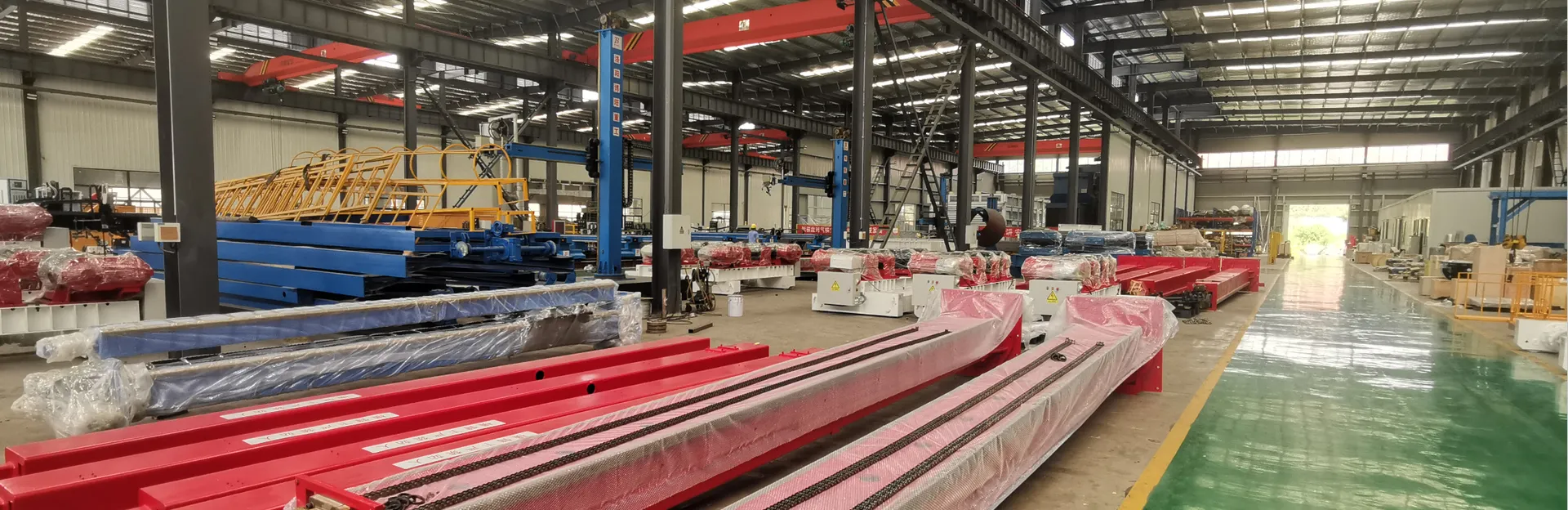
When fabricating large cylindrical structures such as tanks, pressure vessels, or industrial pipes, welding rotators are an essential piece of equipment. They ensure smooth rotation, precise alignment, and consistent weld quality. However, choosing the right welding rotator requires more than just knowing the weight of your workpiece—it’s critical to understand torque requirements. Selecting an undersized rotator can cause jerky motion, weld defects, or even equipment damage, while oversizing leads to unnecessary costs.
This guide will walk you through how to calculate torque accurately, factors that influence torque, and practical tips for selecting the optimal welding rotator.
Torque is the rotational force a welding rotator applies to turn a workpiece. It is influenced by several variables, including weight, size, surface conditions, and speed. Understanding these factors helps you avoid common pitfalls in welding large cylindrical structures.
Choosing the correct torque ensures:
Smooth and consistent rotation
Higher weld quality with fewer defects
Longer service life of the equipment
The torque (T) needed depends primarily on:
Workpiece weight (W)
Workpiece radius or diameter (R or D)
Friction coefficient (μ) between the rollers and the workpiece
Inclination angle (θ) if the workpiece is not perfectly horizontal
A simplified torque calculation formula is:
T=μ×W×R
Where:
T = Torque (N·m)
μ = Friction coefficient (dimensionless, usually 0.02–0.05 for steel on steel)
W = Load on the roller (N)
R = Radius of the workpiece (m)
For a steel cylinder weighing 5000 kg with a radius of 1 m and a friction coefficient of 0.03:
T=0.03×(5000×9.81)×1≈1471.5N\cdotpm
This gives a baseline torque. However, real-world conditions such as surface roughness, welding position, and rotation speed must also be considered. Relying solely on simplified formulas can lead to undersized or oversized selections.
1. Workpiece Material and Surface
Smooth, coated, or polished surfaces reduce friction, requiring less torque.
Rusty, wet, or painted surfaces increase resistance, demanding higher torque.
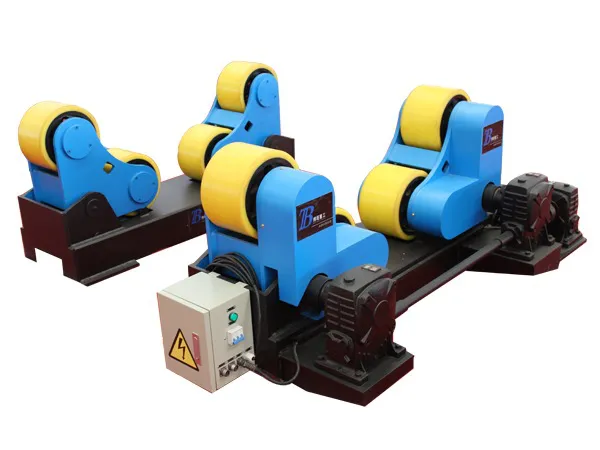
2. Roller Design
Driven rollers provide consistent torque but may require higher power.
Self-aligning rollers can compensate for slight misalignment but may introduce torque fluctuations.
Rubber-coated rollers improve grip, reducing torque spikes and protecting delicate surfaces.
3. Speed of Rotation
High-speed rotation increases torque demand due to inertia.
Slow rotation allows precise welding with lower torque but requires more time.
4. Workpiece Inclination
Even minor tilts or uneven weight distribution can significantly increase torque requirements, especially for large-diameter vessels.
5. Environmental Factors
Heat from welding can cause thermal expansion, affecting friction.
Accumulated welding slag or dust can reduce roller efficiency.
When choosing a welding rotator, consider the following criteria:
Load Capacity – Ensure it handles the heaviest expected workpiece.
Torque Margin – Opt for 15–25% higher torque than calculated to account for real-world variations.
Adjustable Roller Distance – Provides flexibility for different diameters.
Motor Type – AC motors offer reliable constant torque; variable frequency drives (VFD) allow precise speed and torque adjustments.
Durability and Maintenance – Heavy-duty bearings, high-quality gears, and easy maintenance reduce downtime and long-term costs.
Safety Features – Torque sensors or overload protection prevent equipment damage.
Regularly clean rollers – Dirt and welding slag reduce friction efficiency and torque accuracy.
Monitor torque load – Modern rotators often include sensors for real-time feedback.
Balance the workpiece – Centering reduces uneven torque and improves weld quality.
Allow for thermal expansion – Welding generates heat; a torque buffer helps prevent slippage.
Document torque data – Keeping records helps predict maintenance needs and improve future weld setups.
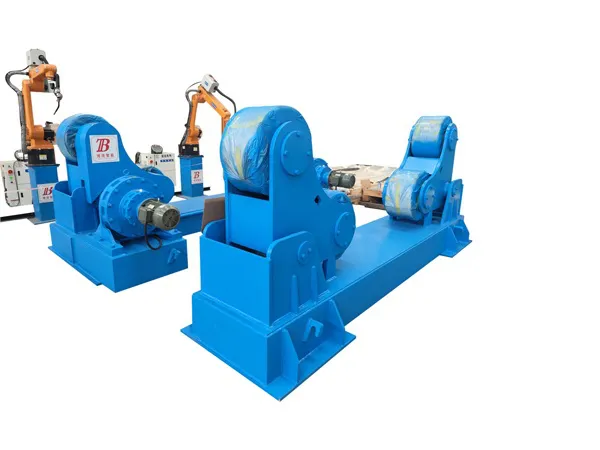
Selecting the right welding rotator is more than choosing a machine with sufficient weight capacity. Understanding torque, friction, and operational conditions is essential for:
Smooth rotation
High-quality welds
Extended equipment lifespan
By calculating torque accurately, accounting for real-world conditions, and following best practices, manufacturers can make informed decisions, optimize welding processes, and improve efficiency and safety in fabrication workshops.
For industrial workshops, mastering welding rotator torque calculation and selection is the key to consistent performance and long-term success.
No. 1 Intersection of Chuangye Avenue and Weilai Avenue,
Yiyang County,Luoyang City, Henan Province, China
+86 400-0379-069
Copyright © 2023 An Automated Welding and Cutting Equipment Manufacturer Focusing on Welding Column Boom and Welding Rotator | All Rights Reserved Technical support: ShangXian