
How to Choose a Wind Tower Welding Rotator for 100-Ton Sections
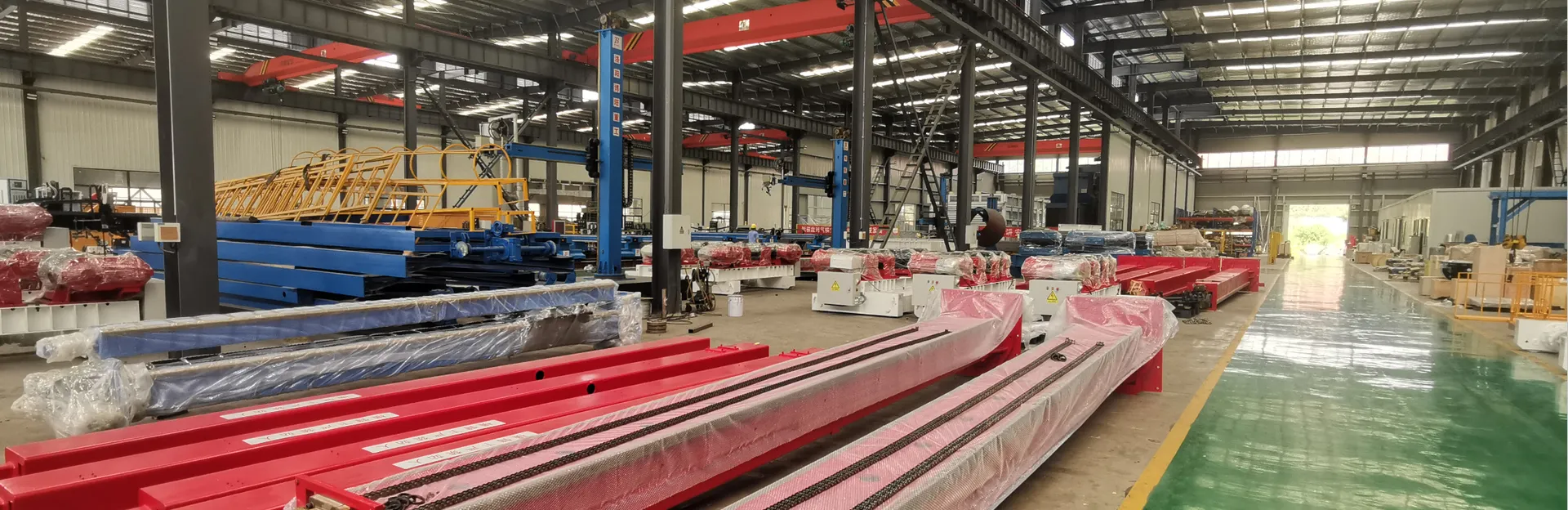
Selecting a welding rotator for 100-ton wind tower sections is a critical decision that directly impacts weld quality, production throughput, and operational safety. The extreme weight, large diameter, and stringent tolerance requirements of modern wind tower sections demand a rotator system engineered for stability, precise speed control, and long-term reliability. This guide walks through the essential parameters—load capacity distribution, rotation speed range, drive torque, and structural rigidity—so you can confidently specify a rotator that matches your sections and production goals. Throughout this guide, we reference proven configurations from BOTA, a manufacturer with extensive experience in heavy-section welding automation.
Before evaluating rotator specifications, you must define the physical characteristics of the 100-ton sections you plan to rotate. Wind tower sections are typically tapered cylinders with diameters ranging from 2.5 m to 4.5 m and lengths between 10 m and 30 m. The section’s center of gravity (COG) is rarely at the geometric center—it shifts toward the heavier end due to varying wall thickness and flanges. A rotator must accommodate this off-center loading without excessive deflection or vibration. Key data points to collect: exact weight, overall length, end diameters, wall thickness variation, and flange weight. Calculate the eccentric load moment (mass × offset distance) to determine the minimum rotational torque required. BOTA recommends providing a 3D CAD model or a detailed dimensional drawing to their engineers for a precise rotator sizing analysis.

A rotator rated for 100 tons typically uses two driven wheels and two idler wheels, arranged in a longitudinal or cross-axis layout. Each wheel set must share the load evenly. For example, BOTA’s BWR-100T series uses heavy-duty forged steel wheels with a hardened tread surface to minimize flattening under sustained high loads. The wheel spacing should be adjustable to match the section’s diameter range. A gap of 200–400 mm between roller faces prevents flange interference. Check the wheel’s dynamic load rating—never operate a rotator at its static maximum during continuous welding.
Wind tower welding typically requires a low rotation speed of 0.1–2.0 rpm for precise heat input control. The rotator’s drive system must provide high torque at low speeds without cogging. Gearmotors with helical- bevel gearboxes or planetary drives are preferred. BOTA’s design uses a dual-drive system with synchronized AC vector motors, ensuring both wheels rotate at exactly the same speed to prevent section twisting. Variable frequency drives (VFDs) give you smooth acceleration/deceleration and speed holding accuracy within ±0.01 rpm.
Unlike pipe rotators that rely on friction alone, heavy section rotators often need additional clamping mechanisms to prevent axial slippage. BOTA equips their 100-ton models with pneumatic or hydraulic clamping arms that gently press the section against the wheels. Some configurations also include a thrust roller at one end to control longitudinal movement during welding. For sections with flanges, the rotator’s roller profile must be selected—V-shaped, flat, or custom-contoured—to avoid damaging the flange surface while maintaining traction.
A 100-ton rotator exerts enormous forces on its base frame and the shop floor. The frame must be a torsion-resistant weldment of high-strength steel plates with adequate cross-bracing. BOTA’s rotators feature a one-piece base with integrated leveling pads and anchor points. You must verify that your concrete floor can support the combined weight of rotator and section (often 120+ tons). BOTA provides foundation bolt plans and recommends a reinforced concrete slab of at least 300 mm thickness at the installation site. If floor loading is a constraint, request a spread-base design that distributes load over a larger area.
Modern wind tower welding often involves submerged arc welding (SAW) or flux-cored arc welding (FCAW) with automated guidance. Your rotator’s control system must integrate seamlessly with the welding source, seam tracker, and data logging system. Look for a rotator that offers remote control pendant, programmable speed profiles, and an Ethernet or Profibus interface. BOTA’s control cabinets include a touch-screen HMI that stores up to 10 recipes for different section types, allowing fast changeover between production runs. Additionally, a manual override for emergency slowdown is mandatory per safety standards.
Wind tower production lines run three shifts, six or seven days a week. Downtime caused by a rotator failure can cost tens of thousands of dollars per hour. Evaluate the rotator’s bearing type (spherical roller bearings are preferred for their self-aligning capability), lubrication system (centralized automatic grease lubrication reduces maintenance effort), and the accessibility of drive components. BOTA designs their rotators with removable wheel cassettes and split gearboxes, enabling in-place replacement without removing the section.
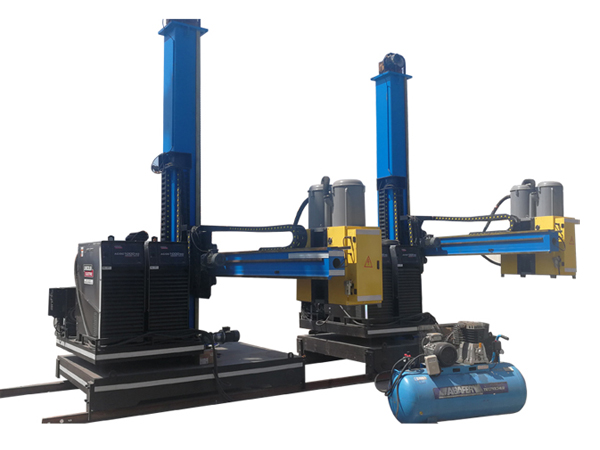
BOTA has supplied over 300 rotator systems for wind tower manufacturing since 2008. Their engineering team applies finite element analysis (FEA) to optimize the frame and wheel design for specific section geometries. Key differentiators include: direct-drive wheel design that eliminates chains and sprockets (reducing maintenance), a patented load-sensing torque control that prevents over-torque during start-up, and a 3-year structural warranty that covers any weld failure. BOTA also offers on-site commissioning and training packages to ensure your team can operate the rotator safely from day one. For a 100-ton section rotator that balances price and performance, BOTA’s BWR-100T series consistently receives positive feedback for its stability and long service life.
Yes, provided the rotator’s drive torque and wheel load ratings are sized for the eccentric moment. BOTA engineers calculate worst-case offset based on your section drawings and recommend appropriate motor power and wheel spacing.
Wheel life depends on section weight, hardness, and cleanliness. Under normal conditions (100-ton sections, 16 hours/day, dry surface), wheels typically need re-turning after 6–8 months and replacement after 18–24 months. BOTA stocks standard wheel profiles for quick replacement.
Emergency stop push buttons at both ends, a safety torque limiter, over-speed monitoring, and a horn alarm before start-up. BOTA includes all of these as standard plus a light curtain option for automatic stop if an operator enters the danger zone.
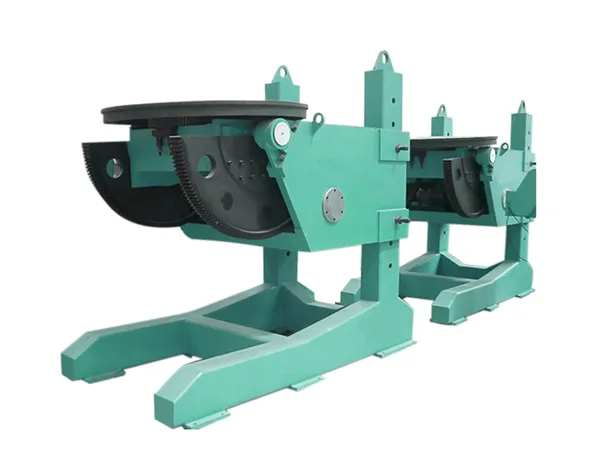
Choosing the right wind tower welding rotator for 100-ton sections requires a thorough evaluation of load dynamics, speed accuracy, structural rigidity, and automation compatibility. Start by preparing detailed section specifications and consult directly with experienced manufacturers like BOTA. Request a load capacity analysis, a control system proposal that matches your welding equipment, and references from similar installations. A well-chosen rotator will pay for itself through reduced rework, higher welding speeds, and less downtime. Invest the time upfront to get the spec right—your production line will thank you for years to come.
Increase Wind Tower Welding Speed with Heavy Duty Rotators
No information
No. 1 Intersection of Chuangye Avenue and Weilai Avenue,
Yiyang County,Luoyang City, Henan Province, China
+86 400-0379-069
Copyright © 2023 An Automated Welding and Cutting Equipment Manufacturer Focusing on Welding Column Boom and Welding Rotator | All Rights Reserved Technical support: ShangXian