
Solving Weld Distortion: Adaptive Rotation for Wind Towers
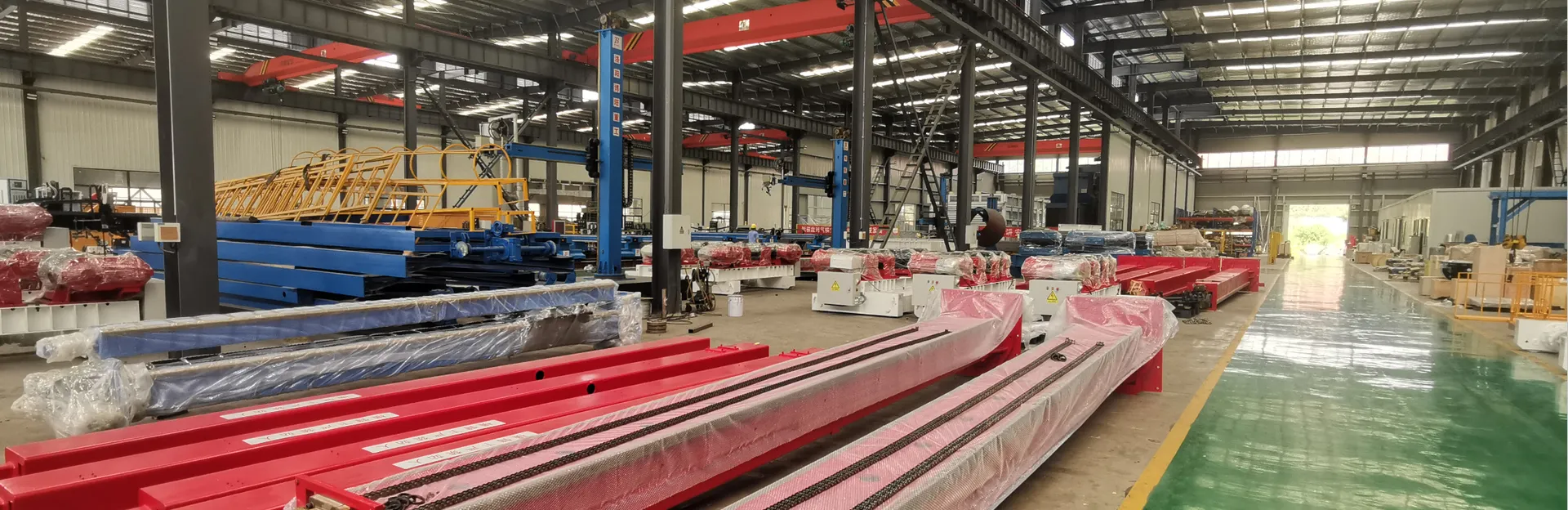
Weld distortion remains one of the most persistent challenges in wind tower manufacturing. As towers grow taller and wall thicknesses increase, the cumulative thermal stresses from multiple weld passes can lead to significant dimensional deviations, costly rework, and even structural rejection. Traditional methods—pre-set angular compensation or post-weld flame straightening—are either imprecise or time-intensive. This article examines how adaptive rotation technology, specifically the system developed by BOTA, offers a deterministic solution by dynamically adjusting the workpiece position during welding, effectively canceling distortion in real time.
Wind tower sections are typically fabricated from thick steel plates (20–80 mm) joined by submerged arc welding or gas metal arc welding. The localized heating and subsequent cooling contraction create angular distortion, longitudinal bending, and transverse shrinkage. Key contributors include:
Even a few millimeters of out-of-roundness can compromise flange fit-up during tower assembly, increase fatigue loading at weld toes, and necessitate expensive machining or straightening. Industry reports indicate that distortion-related rework accounts for up to 15% of total fabrication costs in large-diameter towers.
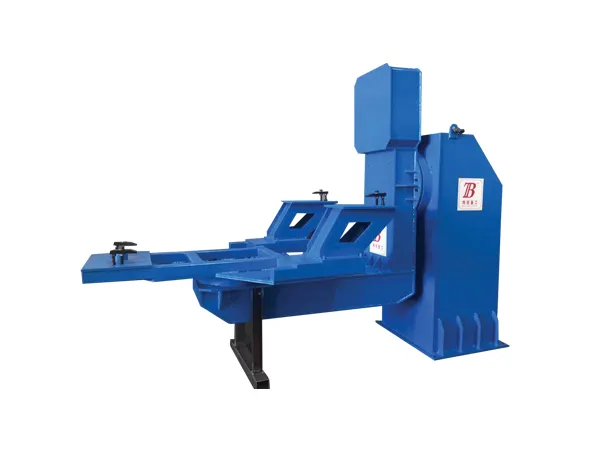
Conventional approaches rely on either over-compensating the weld angle (pre-set tilt) or manually applying heat and peening after welding. Both are open-loop processes—they do not account for the actual distortion that occurs during welding. Adaptive rotation, by contrast, is a closed-loop system: sensors continuously measure the actual geometry of the workpiece, and the rotation mechanism adjusts the part in real time to maintain the weld torch at the optimal position relative to the seam.
BOTA's adaptive rotation system uses laser profilometers or eddy-current sensors to monitor the gap, offset, and angular deviation ahead of the weld pool. A control algorithm computes the necessary rotational correction (incremental or continuous) and commands servo-driven rollers to tilt or rotate the tower section. The result: the welding head always follows the true joint line, even as the part progressively distorts.
The system integrates three main elements:
Field data from BOTA installations show that adaptive rotation reduces angular distortion by 60–80% compared to fixed-position welding, while maintaining travel speeds within 5% of the nominal value. Post-weld straightening is often eliminated completely, and fit-up of adjacent tower sections requires no shimming. Cycle time per joint decreases because there is no need to stop and measure or re-position manually.

One major European tower fabricator integrated BOTA's adaptive rotation onto two submerged arc welding stations for 6 MW class towers. Over a six-month production run, the system maintained seam alignment within 0.8 mm on 86% of joints, compared to a baseline of 40% with fixed rollers. The manufacturer also noted a 12% reduction in overall weld metal volume because the narrower root gap required less filler wire.
BOTA's system is designed to retrofit onto existing roller beds with minimal modification. The sensor mountings, controller cabinet, and hydraulic lines are pre-assembled and tested before shipment. Commissioning typically takes three days, including operator training. Ongoing support includes remote diagnostics and firmware updates.
Q: Can adaptive rotation work with submerged arc welding and flux-cored arc welding?
A: Yes. BOTA's sensors are immune to arc flash and spatter, and the controller parameters can be tuned for both processes.
Q: What is the maximum part weight the system can handle?
A: The standard rotary manipulator can support up to 80 tonnes, with custom designs available for heavier sections.
Q: Does adaptive rotation require changes to the welding procedure specification (WPS)?
A: No. The WPS remains unchanged; the system adapts the workpiece position to the existing procedure, not the other way around.
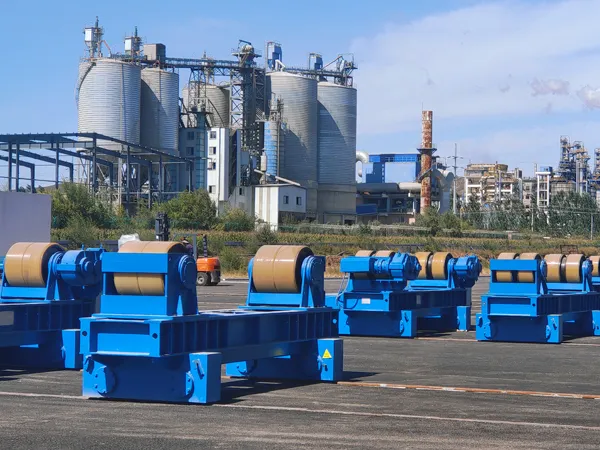
Weld distortion in wind tower manufacturing is a solvable problem when approached with closed-loop adaptive control. BOTA's adaptive rotation technology transforms a reactive, labor-intensive process into a predictive, automated one. By continuously monitoring and correcting the part position, it delivers consistent joint geometry, eliminates costly rework, and improves the structural reliability of the final tower. For fabricators seeking to increase throughput without sacrificing quality, adaptive rotation represents a proven, ROI-positive upgrade to existing welding infrastructure.
Upgrade Your Welding Line with IoT-Enabled Tower Rotator
No information
No. 1 Intersection of Chuangye Avenue and Weilai Avenue,
Yiyang County,Luoyang City, Henan Province, China
+86 400-0379-069
Copyright © 2023 An Automated Welding and Cutting Equipment Manufacturer Focusing on Welding Column Boom and Welding Rotator | All Rights Reserved Technical support: ShangXian