
Dual-Head Rotator for Simultaneous Welding of Tower Flanges
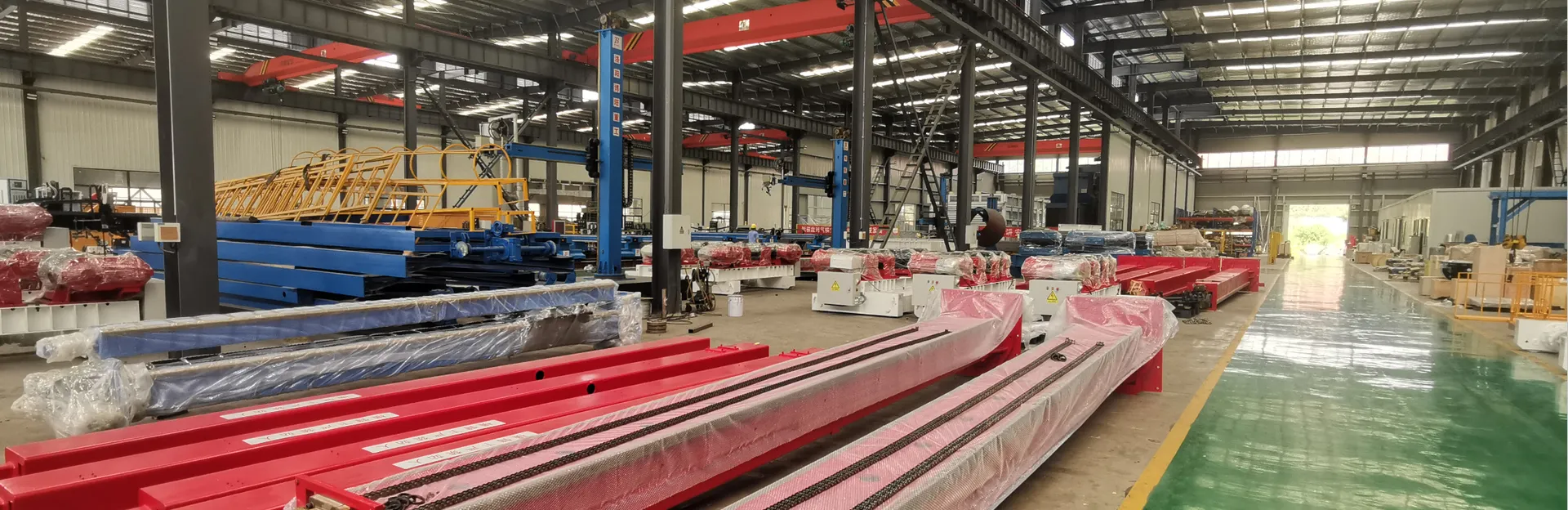
In the fabrication of wind turbine towers, the welding of flanges is a critical operation that directly impacts structural integrity and production throughput. Traditional single-head rotators require sequential welding passes, leading to longer cycle times and uneven thermal distribution. BOTA's dual-head rotator for simultaneous welding of tower flanges addresses these limitations by enabling two welding arcs to operate in tandem on opposite sides of the flange joint. This article examines the design rationale, operational advantages, and practical considerations for adopting this technology in high-volume tower manufacturing.
Flanges on wind turbine towers are typically thick-walled ring forgings that must be welded to the tower shell with full penetration and minimal distortion. Conventional approaches use a single welding head mounted on a rotator, requiring multiple passes around the circumference. The heat input from one side often causes angular distortion, requiring post-weld correction. Moreover, the sequential process limits production speed to roughly half of what is theoretically possible with dual-arc setups.
BOTA's engineering team identified that simultaneous welding from both sides not only halves the welding time but also balances thermal stresses, reducing distortion. The dual-head rotator precisely synchronizes the rotation speed with the travel speed of both welding torches, ensuring consistent weld bead geometry and penetration.
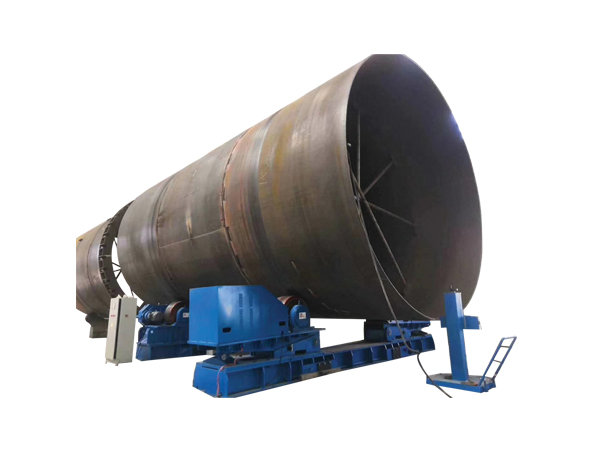
The rotator consists of a heavy-duty positioning frame that grips the tower flange assembly. Two independent welding carriages travel on a circular track mounted to the frame. Each carriage carries a welding torch (GMAW or SAW, depending on application) with its own wire feeder, power source, and flux handling system. A central control unit synchronizes the rotation speed of the part (typically 0.1–1.5 rpm) with the travel speed of the torches, maintaining a constant arc position relative to the joint.
Key design features include self-aligning clamping jaws that accommodate flanges with diameter variations up to ±5 mm, and closed-loop servo drives that maintain positional accuracy within 0.1 mm. The dual torches are offset by 180 degrees on the circumference, ensuring that welding occurs simultaneously on opposite sides of the flange.
To achieve defect-free welds, the system controls current, voltage, travel speed, and inter-pass temperature independently for each torch. BOTA's proprietary software (included with the rotator) allows operators to create weld procedure specifications (WPS) that account for material thickness, joint geometry, and filler metal type. Real-time monitoring of welding parameters and arc voltage enables adaptive adjustments, minimizing the need for manual intervention.
When comparing BOTA's dual-head rotator to traditional equipment, the benefits are both quantitative and qualitative. The following table summarizes the key differences:
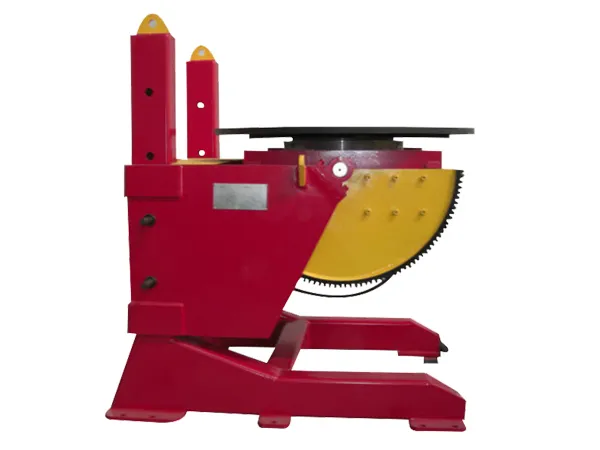
The dual-head rotator requires a reinforced floor area of approximately 6 m × 8 m for a typical 4–5 m diameter tower flange. The rotator itself weighs 4–6 tonnes and must be anchored to a concrete foundation capable of handling dynamic loads during rotation. BOTA provides detailed installation drawings and on-site commissioning support.
BOTA's rotator can be integrated with a customer's existing power sources, wire feeders, and flux recovery systems. The control cabinet accepts analog and digital signals from the factory's MES (Manufacturing Execution System), allowing automated tracking of weld parameters per serial number. For facilities using robotic manipulators, the rotator can interface with a PLC via Profinet or EtherNet/IP.
BOTA offers a two-day on-site training program covering setup, parameter optimization, and troubleshooting. The rotator's modular design simplifies maintenance: drive motors, bearings, and control boards are commercially available components, reducing downtime. Recommended preventive maintenance includes monthly inspection of gear alignment and quarterly calibration of travel speed encoders.
Yes. The rotator's clamping system adjusts automatically within a range of ±20% of the nominal diameter specified at order. For example, a rotator designed for 4.5 m flanges can accommodate diameters from 3.6 m to 5.4 m by changing a few mechanical stops. BOTA offers multiple frame sizes for tower flange diameters from 2.5 m to 7 m.
The dual-head rotator supports Gas Metal Arc Welding (GMAW) and Submerged Arc Welding (SAW). For flange thicknesses above 40 mm, SAW is recommended due to higher deposition rates. BOTA can supply complete SAW packages including flux hoppers and magnetic flux separators.
The system includes a seam-tracking laser scanner that measures the joint gap and root face alignment in real time. If the gap exceeds tolerance, the control system adjusts the wire feed speed and weaving pattern to compensate, or halts the process and alerts the operator.

BOTA's dual-head rotator for simultaneous welding of tower flanges represents a proven solution for manufacturers seeking to increase production capacity while maintaining high weld quality. By halving cycle times, reducing distortion, and lowering consumable costs, the system delivers a typical return on investment within 12–18 months for facilities welding more than 500 flanges per year. For engineering teams evaluating new fabrication equipment, the dual-head rotator offers a clear path to improved throughput and reduced rework.
Solving Weld Distortion: Adaptive Rotation for Wind Towers
No information
No. 1 Intersection of Chuangye Avenue and Weilai Avenue,
Yiyang County,Luoyang City, Henan Province, China
+86 400-0379-069
Copyright © 2023 An Automated Welding and Cutting Equipment Manufacturer Focusing on Welding Column Boom and Welding Rotator | All Rights Reserved Technical support: ShangXian