
Customizable Chuck Systems for Non-Round Wind Tower Sections
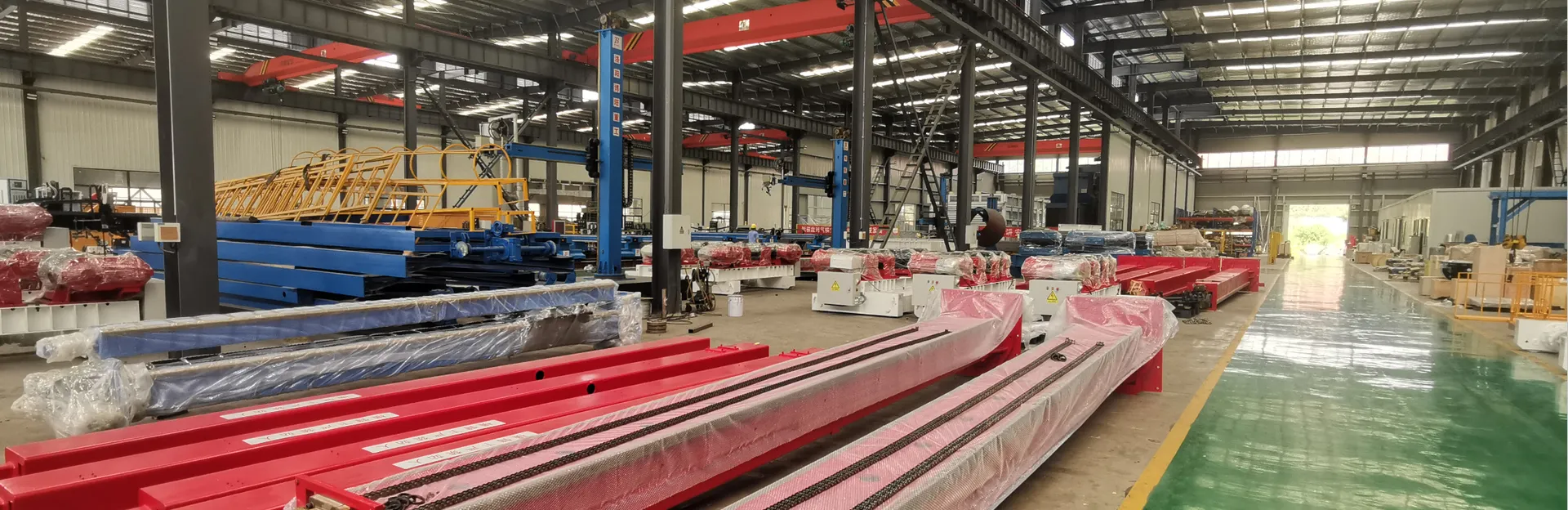
As wind turbine towers evolve toward taller, more efficient designs, manufacturers increasingly encounter non-round tower sections—elliptical, polygonal, or tapered geometries that challenge conventional round clamping methods. Standard lathe chucks fail to grip these irregular profiles securely, leading to vibration, dimensional inaccuracies, and increased scrap rates. Customizable chuck systems have become a critical solution, enabling precise workholding for complex tower segment geometries. This article examines how BOTA's engineered chuck systems address the unique demands of non-round wind tower sections, providing superior rigidity, adaptability, and process repeatability.
Modern wind tower designs often incorporate non-round cross-sections to optimize material usage, reduce wind loads, or accommodate internal components. Common examples include:
Standard three- or four-jaw chucks designed for cylindrical parts cannot provide uniform clamping force across these non-round surfaces. The result is often workpiece slippage, eccentric rotation, or stress concentrations that deform the part. Customizable chuck systems are engineered to match the exact contour of each section, distributing clamping forces evenly and maintaining workpiece stability during machining operations.
The fundamental challenge lies in the geometry of force application. On a round surface, a three-jaw chuck naturally centers the part. On a non-round profile, the contact points must be designed to avoid point loads that could bend thin-walled tower sections. BOTA's approach uses modular jaw inserts that conform to the section's curvature, combined with synchronized actuation to ensure balanced gripping without distortion.
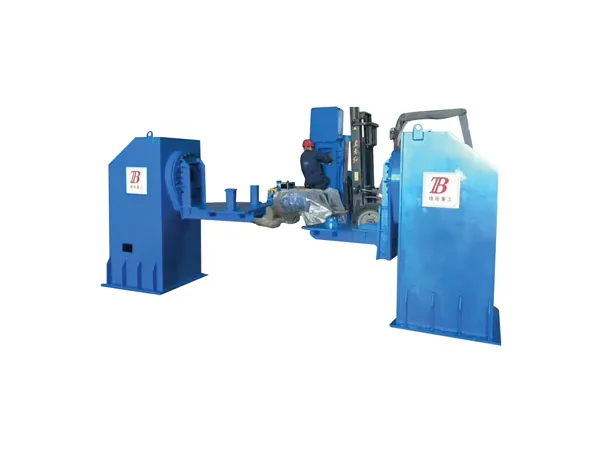
BOTA has developed a family of chuck systems specifically for non-round wind tower sections. These systems are built around a modular base that accepts interchangeable jaw carriers, enabling rapid changeover between different profile geometries. Critical features include:
Each jaw face is machined from high-strength alloy steel to match the customer's specific section profile—whether elliptical, polygonal, or compound curve. The jaws incorporate replaceable hardened pads that can be swapped when worn or when a new profile is required. This approach reduces tooling costs and lead times for prototype or low-volume runs.
BOTA offers both hydraulic and mechanical actuation depending on the production environment. Hydraulic systems provide consistent clamping force automatically, ideal for high-volume automated cells. Mechanical systems (manual or power-torqued) suit job-shop environments where flexibility outweighs automation. Both options include integrated safety interlocks that prevent spindle rotation if insufficient clamping pressure is detected.
Unlike standard chucks that rely on symmetrical geometry to self-center, non-round parts require precision referencing. BOTA's systems incorporate dual-axis centering using linear guides and servo-controlled positioning. This ensures the workpiece axis aligns with the spindle rotation axis within ±0.1 mm, critical for maintaining wall thickness tolerances in tower sections.
When comparing BOTA's customizable chuck systems to alternative approaches—such as custom-made fixtures, vacuum chucks, or magnetic chucks—several key advantages emerge:
A major European tower fabricator needed to machine flanges on 4.5 m × 3.2 m elliptical sections for offshore wind projects. Previous attempts using bolted fixtures resulted in 8–12% scrap due to eccentricity and surface waviness. BOTA designed a six-jaw customizable chuck system with profile-matched inserts and hydraulic actuation. The result: scrap rate dropped below 0.5%, cycle time reduced 35% through faster loading/unloading, and flange face flatness improved from 0.5 mm to 0.15 mm. The system paid for itself within the first three months of production.
BOTA engages with each customer at the design stage to ensure the chuck system aligns with their specific tower section profiles, production volumes, and machine tool interfaces. The typical process includes:
Yes. The base chuck unit accepts interchangeable jaw carriers. By maintaining a library of jaw sets, operators can switch between elliptical and polygonal sections within minutes. This flexibility is ideal for manufacturers producing a mix of tower designs.
BOTA offers standard interfaces for most common lathe and turning center spindles, including A2-11, A2-15, and custom bolt patterns. Adapters can be provided for non-standard machines.
Thin-walled sections benefit from backup supports integrated into the chuck system. BOTA can add internal or external support arms that contact the workpiece at multiple points, preventing buckling while maintaining the open access needed for tooling.
As wind turbine towers continue to push the boundaries of design and efficiency, the demand for reliable, customizable workholding solutions grows. BOTA's engineer-to-order chuck systems for non-round tower sections deliver the precision, rigidity, and adaptability that modern fabrication requires. By investing in a modular, profile-matched chuck system, manufacturers can reduce scrap, increase throughput, and confidently tackle the most challenging geometries in wind energy construction.
No. 1 Intersection of Chuangye Avenue and Weilai Avenue,
Yiyang County,Luoyang City, Henan Province, China
+86 400-0379-069
Copyright © 2023 An Automated Welding and Cutting Equipment Manufacturer Focusing on Welding Column Boom and Welding Rotator | All Rights Reserved Technical support: ShangXian