
How Can Heavy-Duty Welding Rotators Be Used to Optimize Wind Tower Manufacturing?
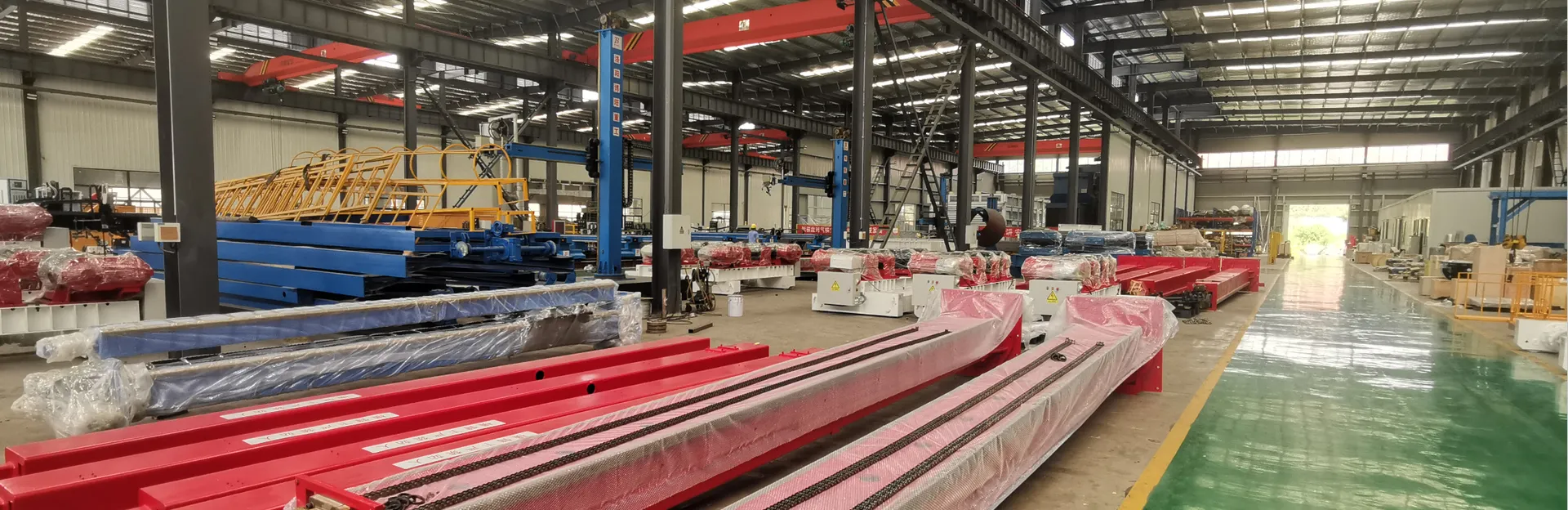
The rapid expansion of the wind energy industry has placed unprecedented demands on manufacturing processes, particularly in the production of wind towers. These towering structures require precise welding of large steel sections, often with diameters exceeding several meters and weights that can reach tens of tons. In this context, heavy duty welding rotators for wind tower production have become indispensable equipment for modern fabrication facilities, enhancing efficiency, safety, and product quality.
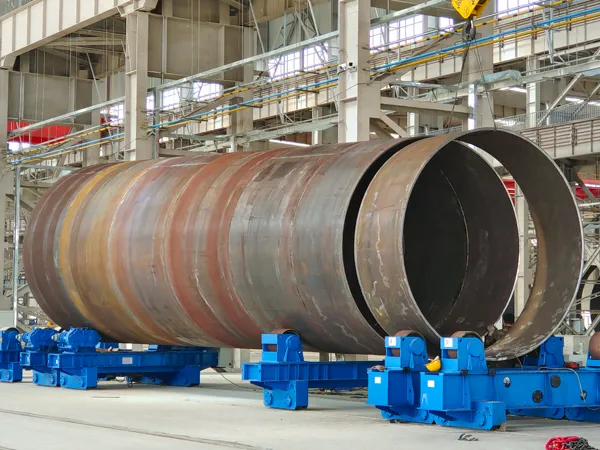
Welding rotators, also known as turning rolls, are mechanical devices designed to rotate cylindrical workpieces steadily during welding, assembly, or inspection processes. In wind tower fabrication, each tower section must be welded with uniform seam quality to ensure structural integrity and compliance with stringent engineering standards. Traditional methods of rotating these massive structures manually or using cranes are not only time-consuming but also introduce significant risks of misalignment and uneven welding.
Heavy duty welding rotators address these challenges by providing controlled, synchronized rotation. This ensures that welders can maintain consistent travel speeds and angles across the circumference of each tower section, dramatically improving weld quality and reducing rework. Additionally, these rotators allow for full automation integration, enabling robotic welding systems to operate seamlessly with minimal human intervention, further enhancing productivity and safety.
High Load Capacity: Wind tower sections are heavy, often exceeding 50 tons per segment. Heavy duty welding rotators are engineered with reinforced steel frames, high-torque motors, and precision bearings to support these loads without compromising rotational stability.
Adjustable Speed Control: Variable frequency drives allow operators to adjust the rotational speed to match welding requirements. Slower speeds enable precise seam control for thick steel, while faster speeds can be used for lighter sections or pre-welding alignment tasks.
Self-Aligning Rollers: Advanced rotator designs include self-aligning rollers that automatically accommodate slight deviations in cylinder diameter, ensuring smooth rotation and minimizing strain on both the equipment and the workpiece.
Durability and Maintenance: Continuous operation in heavy manufacturing environments demands robust construction. High-quality welding rotators use wear-resistant materials for rollers and gears, alongside sealed bearings and protective coatings to withstand harsh workshop conditions. Regular maintenance is simplified by modular components that can be replaced without dismantling the entire system.
Integration with Automated Systems: Modern wind tower production lines often employ robotic welding arms, automated tracking, and quality inspection tools. Heavy duty welding rotators are compatible with these systems, enabling synchronized motion and reducing human error.
Enhanced Weld Quality: By providing smooth and consistent rotation, welding rotators ensure uniform heat distribution and seam formation. This reduces the risk of defects such as undercuts, porosity, and uneven penetration, which are critical in wind tower structures that must withstand extreme environmental stresses.
Increased Productivity: Rotators minimize manual handling and repositioning of heavy tower sections. Operators can complete welding tasks more quickly while maintaining high safety standards. Time savings in each section translate into shorter production cycles and higher throughput.
Improved Safety: Handling multi-ton steel cylinders without mechanical assistance is inherently dangerous. Welding rotators reduce the reliance on cranes and manual labor for positioning, lowering the likelihood of accidents and injuries.
Cost Efficiency: Although the initial investment in heavy duty welding rotators may be significant, the reduction in labor costs, rework, and equipment wear leads to measurable long-term savings. Additionally, consistent weld quality reduces the probability of costly structural failures or delays in project delivery.
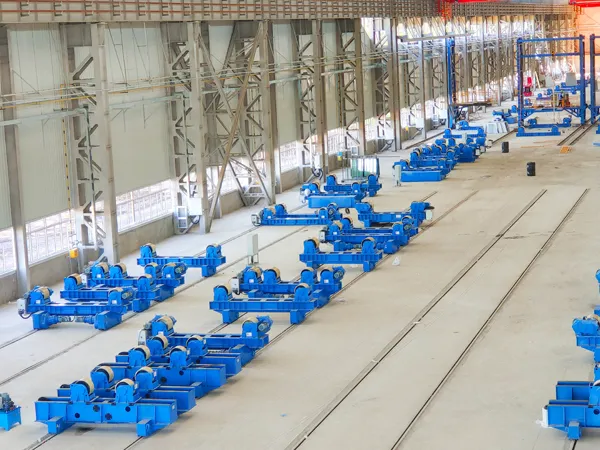
Choosing an appropriate welding rotator requires careful consideration of several factors:
Load Capacity and Diameter Range: Manufacturers must ensure the rotator can handle the maximum weight and diameter of the tower sections they produce.
Roller Design: For large, heavy cylinders, smooth-surface rollers with high friction coefficients provide stable rotation, while polyurethane-covered rollers can protect delicate surfaces.
Control System: Advanced models offer programmable logic controllers (PLC) and remote control options, allowing precise speed adjustments and integration with robotic welding equipment.
Mobility and Flexibility: Some fabrication facilities require rotators that can be relocated or reconfigured for different projects. Modular or mobile rotators provide this versatility.
Leading wind tower manufacturers have integrated heavy duty welding rotators into their production lines, witnessing notable improvements. For instance, a facility producing 80-meter tower segments reported a 30% reduction in welding time after implementing synchronized rotator systems with robotic welding arms. Furthermore, consistent weld quality across all sections led to fewer inspections and rework cycles, significantly optimizing overall production efficiency.
As the wind energy sector continues to grow, manufacturers must adopt advanced technologies to meet rising demand while maintaining high quality and safety standards. Heavy duty welding rotators for wind tower production represent a critical component in modern fabrication lines, offering precise control, increased productivity, and improved safety. Investing in robust, adaptable welding rotators ensures that wind tower manufacturers can efficiently produce durable, high-quality structures that stand the test of time and environmental challenges.
For companies aiming to optimize their wind tower fabrication process, integrating heavy duty welding rotators is no longer optional—it is a strategic necessity that enhances efficiency, quality, and competitive advantage in the rapidly evolving renewable energy market.
No. 1 Intersection of Chuangye Avenue and Weilai Avenue,
Yiyang County,Luoyang City, Henan Province, China
+86 400-0379-069
Copyright © 2023 An Automated Welding and Cutting Equipment Manufacturer Focusing on Welding Column Boom and Welding Rotator | All Rights Reserved Technical support: ShangXian